
 English
 中文简体
中文简体 русский
Walking your dog should feel like a shared adventure, not a guessing game about gear. Many dog owners reach for a Pet Leash without fully thinking through which type fits their dog's personality, training level, and daily environment. A retractable leash, with its spring-loaded cord that extends and retracts at the press of a button, offers a very different walking experience than a standard fixed-length Leash — and understanding that difference can genuinely change the quality and safety of every walk you take together.
What Exactly Is a Pet Leash?
At its core, a Pet Leash is a tether that connects your dog to you during a walk. Simple enough. But the word covers a wide spectrum of tools — from a basic two-foot traffic lead to an extending cord that stretches over twenty feet. A standard leash is a fixed-length strap or rope, typically four to six feet, giving the handler direct and consistent contact with the dog. A retractable version works differently: the cord or flat tape sits coiled inside a plastic handle and unspools freely as the dog moves away, held back only by spring tension or a thumb-operated brake.
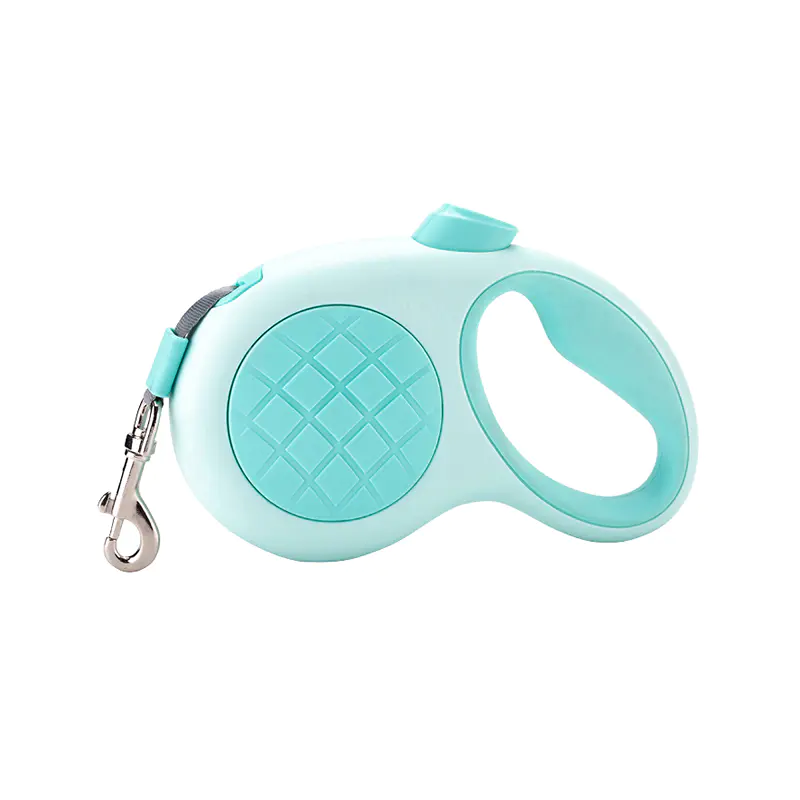
That mechanical difference sounds minor. It is not. How much distance exists between you and your dog at any given moment shapes everything — your reaction time, your dog's sense of boundaries, and frankly, how much trouble either of you can get into before the other notices. A retractable cord is not simply a longer leash. It is a fundamentally different tool with its own logic, its own benefits, and a specific set of situations where it becomes genuinely hazardous.
When Can a Retractable Leash Actually Work Well?
Open, Uncrowded Spaces Make All the Difference
There is a version of retractable leash use that works well, and it looks like this: a calm dog with solid recall, moving through a wide-open field or a quiet beach with almost no other people around. In that context, the extended cord allows real freedom — sniffing, light running, range to explore — while the owner maintains a tether. That is genuinely useful.
Environments where it tends to be reasonable:
- Large, quiet fields with minimal foot traffic
- Wide hiking trails or beach stretches far from crowds
- Open meadows where you can see in every direction
- Unfenced yards where a physical boundary is absent but some control is still needed
Well-Trained Dogs Only — and That Bar Is Higher Than People Think
Here is something worth sitting with: a dog being "pretty good on walks" is not the same as being ready for a retractable cord. Before using one, a dog should be able to walk on a loose leash consistently, come when called under moderate distraction, and not bolt at squirrels, cyclists, or other dogs. If any of those three feel uncertain, the retractable will expose every gap.
Used this way — trained dog, open space, low foot traffic — it offers a reasonable middle ground between full off-leash freedom and the tight proximity of a short lead. Some owners use it specifically for recall practice in fields, or to give senior dogs a gentler, wider range without the pulling effort a fixed leash requires.
One practical note: if you do use a retractable cord, pair it with a harness rather than a collar. If a dog reaches the end of the line at speed, the jolt lands across the chest rather than snapping the neck. That single adjustment eliminates one of the more serious physical risks.
When Should You Avoid Using One?
This section carries more weight than the one above. Most dogs, in most real-world walking situations, are better served by something else entirely.
Busy Streets and Urban Environments
Picture a dog fifteen feet ahead on a thin cord, and a bike appearing from a side street. The math is unkind. By the time the brake engages and the cord reels in, those fifteen feet have already played out in ways you cannot undo. Near traffic, in crowded parks, on busy sidewalks — the extended range is not a feature, it is a liability.
Dogs on retractable cords can wander into the road while the handler is momentarily distracted. They can approach strangers or children without warning. The cord itself, stretched taut between handler and dog, becomes a trip wire that neither pedestrians nor cyclists can always see.
Does Your Dog Pull, Lunge, or React Unpredictably?
If the answer is sometimes — use a fixed leash. Retractable cords are physically incompatible with reactive or pulling dogs. Here is why: the mechanism relies on constant tension. The cord is always slightly taut. From a dog's perspective, that tension is the signal that forward movement is happening and pulling is working. Every walk on a retractable cord reinforces that pulling gets results. Trainers call this a feedback problem, and it is a serious one.
Dogs who fall into the avoid category:
- High prey drive dogs who chase birds, squirrels, or bikes
- Reactive dogs who lunge toward other animals or strangers
- Large, powerful dogs whose momentum can snap the cord or pull the handle free
- Any dog whose public behavior is inconsistent
Puppies Learning to Walk on Leash
Starting a puppy on a retractable cord is one of the more common training mistakes. Puppies learn through repetition, and what they learn on a retractable is that tension equals forward progress. Switch later to a standard leash and you will spend weeks unlearning that habit. Start with a flat leash from day one, build loose-leash walking skills, and revisit the question of extended cords only once those foundations are solid.
Tight Spaces and Low-Visibility Situations
Veterinary offices, pet store aisles, crowded trails — anywhere the cord can tangle around a stranger's legs, wrap around a tree, or drape across another dog. Also: nighttime, foggy mornings, areas with sharp corners. If visibility is reduced or the space is confined, the extended range creates hazards faster than you can respond.
The Core Safety Trade-Offs at a Glance
| Situation | Retractable Leash | Fixed-Length Leash |
|---|---|---|
| Open park, trained dog | Suitable | Also suitable |
| Busy sidewalk | Not recommended | Recommended |
| Reactive or untrained dog | Avoid | Recommended |
| Puppy in early training | Avoid | Recommended |
| Nature trail, low foot traffic | Suitable with caution | Suitable |
| Urban area with traffic | Avoid | Recommended |
| Decompression sniff walk | Suitable in right space | Works with longer fixed lead |
What Are the Real Injury Risks?
These are not hypothetical. They are documented, recurring, and worth naming plainly.
Injuries to people:
The thin cord, moving fast under tension, can cause severe rope burns on hands, legs, and fingers when it slides across skin. If it wraps around a finger and a large dog keeps running, the outcome can be amputation. The plastic handle, if dropped on a hard surface, can recoil and strike the person or animal nearby. Passersby who get caught in a taut cord across a path have been knocked off their feet.
Injuries to dogs:
A dog running at full speed who hits the end of a retractable cord experiences a sudden, violent jolt to the neck. That force can worsen an existing disc issue, cause tracheal damage, or create spinal injuries. Smaller dogs are especially vulnerable. And because the cord is thin, it can also cut or abrade a dog's legs if it wraps during movement.
Equipment failure:
The mechanism can jam, refuse to retract, or spool out uncontrollably. The cord can fray from repeated friction against the housing and snap at low tension with little warning. These are not edge-case failures — they happen regularly with moderate use over time.
The dropped handle problem:
Many dogs, particularly anxious ones, are genuinely frightened by the sound and sight of a dropped handle bouncing and dragging behind them. The handle chases the dog as it retracts. That scenario can result in a runaway dog, a dog bolting into traffic, or lasting anxiety around walks that is very hard to undo.
How Do You Decide If It Is Right for Your Dog?
Rather than a single answer, a few honest questions get there faster.
About your dog:
- Does your dog walk without pulling in most situations?
- Can you recall your dog reliably when something interesting is nearby?
- Is your dog's reaction to other animals and strangers generally predictable?
About your route:
- Is the area open, low-traffic, and free of tight corners or obstacles?
- Could you close fifteen feet of distance in under two seconds if needed?
- Are there other dogs, cyclists, or children likely to appear without warning?
About your own handling:
- Can you operate the brake mechanism quickly and without fumbling?
- Do you know how to reel in cord without letting it pile at your feet?
- Are you typically focused during walks, or do you check your phone?
A green light on all three groups is genuinely rare. If it applies to you — calm dog, open space, confident handling — this tool may be a reasonable addition to your routine for specific situations. Otherwise, the honest answer is that a fixed leash will serve you better on most days.
What Alternatives Actually Work?
When the retractable cord is not the right fit — which, again, covers most everyday walking scenarios — there are solid alternatives at every length:
- Standard fixed leash (4 to 6 feet): The baseline for urban walking, training, and anywhere control matters. Consistent, predictable, easy to handle with two hands for strong dogs.
- Short traffic leash (2 feet): Keeps the dog close in dense environments — vet waiting rooms, crowded sidewalks, near traffic. Some 6-foot leashes include a secondary handle for this purpose.
- Long line (15 to 30 feet, fixed): Gives the range of a retractable cord without the spring mechanism. Better for recall training in open fields because the handler has direct physical feedback through the line.
- Harness and fixed leash combination: Redirects pulling force across the chest rather than the neck, and gives cleaner directional communication for dogs still building leash manners.
Each of these serves a different walking reality. None of them rewards pulling. That alone is a meaningful distinction.
If You Do Use One, a Few Habits Worth Building
For owners who walk regularly in appropriate environments and choose to keep using a retractable cord, the difference between a safe experience and a dangerous one often comes down to habits formed before anything goes wrong.
- Practice in a contained, familiar space before relying on it anywhere complex
- Lock the cord at a shorter length — six to eight feet — in any area that is not completely open
- Reel in slack proactively rather than waiting for tension to build
- Keep the cord away from your fingers, ankles, and legs at all times
- Only adults should handle a retractable cord — children do not have the reaction time or grip strength to manage a sudden lunge
- If the handle is ever dropped, call your dog toward you immediately and stay calm; a panicking dog running from a bouncing handle is a genuine emergency
These habits do not eliminate the tool's limitations. But they reduce the gap between what can go wrong and your ability to respond.
The Simplest Way to Think About It
A retractable leash is a tool with a clear profile: it rewards predictable dogs in forgiving environments and breaks down quickly when the situation demands fast, precise control. It reinforces pulling, introduces real physical risks to both handler and dog, and fails in the hands of anyone managing a dog whose behavior is still developing. Use it when your dog is calm, trained, and the environment is genuinely open and low-risk. Set it aside — without guilt — anywhere you need to respond in seconds rather than minutes. For dog owners looking for walking equipment built around practical safety rather than marketing convenience, Taizhou Opey Pet Products Co., Ltd. approaches every Pet Leash design with that same question in mind: does this tool actually help the handler stay in control, or does it only feel like it does? The right answer to that question, matched honestly to your dog and your daily walk, is what keeps both of you safer out there.