
 English
 中文简体
中文简体 русский
Many pet owners see their animals circling the bathroom sink or batting at dripping faucets while completely ignoring a fresh bowl of water sitting nearby. This odd habit points to something deeper about how pets approach drinking. A pet water fountain connects directly to instincts left over from the wild, turning a simple need to stay hydrated into something that feels interesting and natural instead of just another chore.
Why Many Cats and Dogs Don't Drink Enough Water
Pets kept indoors run into a hydration problem their wild relatives never faced. Wild meat-eaters got most of their water straight from prey, so they developed a low thirst drive compared to plant-eaters or mixed feeders. Domestic cats carry that same trait forward, often showing little drive to drink even though their bodies need steady fluids.
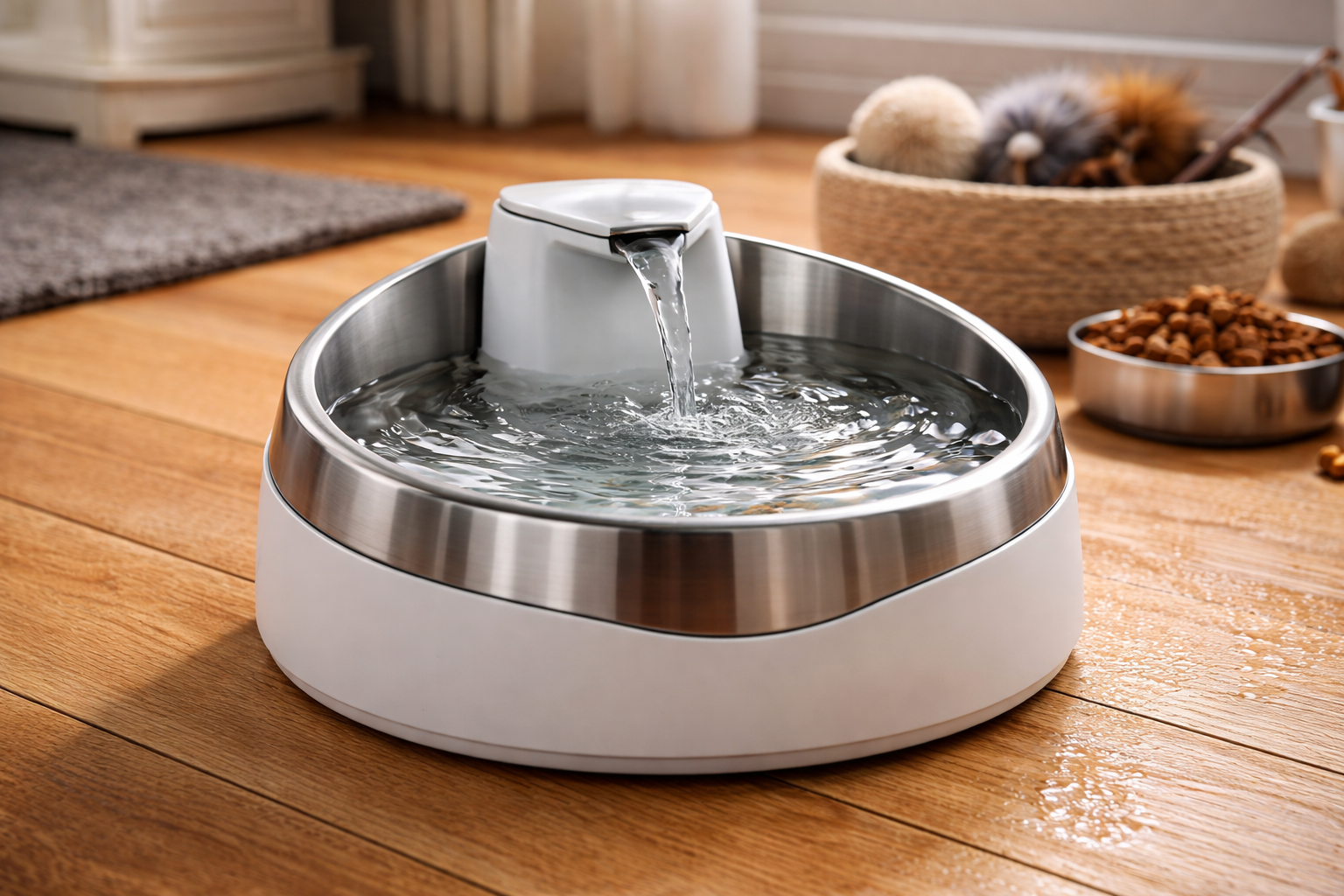
Understanding the thirst deficit:
- Cats come from dry landscapes where water was rare and sometimes risky
- Their kidneys pack urine down tightly, hiding early signs of dehydration
- Indoor dogs miss out on the natural movement that used to make them drink more often
- Steady indoor temperatures remove the hot or cold signals that once pushed them to seek water
A full bowl sitting there all day gives owners a false feeling everything is fine. If the level looks the same morning and night, it usually means the pet is avoiding it rather than drinking enough. Many animals take in just enough to get by while living in a state of low-grade dehydration that quietly builds strain on their organs over months and years.
Visible signs of insufficient water intake include:
- Skin that stays pinched instead of snapping back when gently lifted
- Gums that feel dry or sticky to the touch
- Eyes that look more sunken than usual
- Lower energy levels or unexpected tiredness
- Urine that appears very dark and strong-smelling
These clues typically show up only after dehydration has moved past the mild stage, so small shortfalls often slip by during normal daily checks.
How Flowing Water Triggers a Pet's Natural Drinking Instinct
Moving water turns plain liquid into something pets instinctively want. In nature, still pools gather bacteria, parasites, and dirt while running streams stay cleaner by flushing everything away. That old survival wiring stays active in modern pets, making them prefer moving water even when a still bowl sits right there.
Sensory elements that activate drinking responses:
- Ripples and flashes of light draw the eye from the side
- The soft trickle sound signals safe, fresh water
- Constant motion keeps dust and bits from settling
- Air mixing in changes how the water tastes
- Slight temperature shifts from flow feel more refreshing
A quiet bowl doesn't hit those same senses all at once. A cat or dog can walk right past without noticing it, but the gentle splash of a fountain pulls attention from across the room. This goes beyond simple liking—it's the difference between ignoring water and actively going after it.
The brain lights up differently with moving water compared to still. Areas tied to reward and drive show stronger activity when pets see or hear flow, which explains why they'll stretch up to a dripping faucet but walk past a full bowl.
The Science Behind Hydration and Pet Health
Water makes up roughly sixty to seventy percent of an adult pet's body weight and acts as the base for almost every internal process. Blood plasma carries nutrients and oxygen to cells while hauling waste to the kidneys and liver. Digestive juices need water to work properly. Joint cartilage relies on fluid pressure to cushion movement.
When hydration drops, the body switches to saving mode. Kidneys squeeze urine tighter to hold water, raising the chance of crystals forming into stones or blockages. Lower blood volume forces the heart to pump harder. Digestion slows, leading to constipation and poorer nutrient uptake.
Critical health systems affected by hydration status:
| Body System | Role of Water | Consequence of Deficit |
|---|---|---|
| Urinary | Dilutes minerals, flushes bacteria | Stone formation, infections |
| Renal | Filters waste, regulates electrolytes | Chronic kidney stress |
| Digestive | Produces saliva, moves food | Constipation, poor absorption |
| Circulatory | Maintains blood volume | Reduced oxygen delivery |
| Temperature | Enables cooling through panting | Heat stress vulnerability |
Chronic kidney issues top the list of serious problems in cats, with steady low hydration named as a key contributor. Damaged kidney filters don't grow back, so keeping fluids steady through drinking prevents far more trouble than trying to treat damage later.
In dogs, hydration ties directly to joint comfort and bounce-back after exercise. Active breeds get tiny muscle tears during play or work that need good fluid flow for repair. Dry tissues heal slower and stay more prone to further injury.
What Makes a Pet Water Fountain Different From a Regular Bowl
A fountain keeps water moving, which changes both how it looks and what it does chemically. Circulation mixes in air, giving the water a fresher taste and slowing bacterial buildup. That aeration makes it feel "lighter" compared to the flat taste of water that's sat still for hours.
Filtration tackles things pets notice but people miss. Carbon filters pull out chlorine, minerals, and organic smells that build up even in a clean-looking bowl. Continuous filtering runs water through barriers that catch particles before they settle or dissolve.
Key operational differences:
- Water cycles fully every few minutes instead of sitting unchanged
- Filter contact happens constantly rather than only during bowl swaps
- Movement keeps the water cooler through evaporation
- Constant surface motion stops dust from sticking
- Different flow zones let pets pick their favorite drinking spot
These changes show up in how often pets approach. Animals start checking the fountain during their normal activity rounds instead of drinking only when thirst gets strong enough to push past their dislike of still water.
How a Pet Water Fountain Changes Daily Drinking Habits
Watching pets closely shows patterns that casual glances miss. When a fountain with circulating water sits out, cats usually drink twenty to forty percent more each day, taking smaller amounts spread across many short visits instead of big gulps once or twice. This steady sipping keeps fluid levels more even than the feast-or-famine style bowls often see.
Dogs adapt in ways that tie to their size and energy. Small breeds tend to linger near the fountain, grabbing quick laps between play or naps. Larger breeds often park themselves beside it for longer drinks—something they rarely bother with at a still bowl. The simple interest of watching and hearing water move seems to stretch out drinking time past what their bodies strictly demand.
Observable changes in routine:
- Heading straight to the fountain first thing in the morning before expecting food
- Drinking right after active play without needing a reminder
- Taking extra sips during nighttime wake-ups
- Cutting back on faucet pawing or toilet visits
- Showing less interest in licking condensation from windows or plants
Young pets and older ones react especially strongly. Kittens and puppies treat fountains like toys at first, building good feelings around the spot. Senior animals with fading thirst signals get a gentle nudge from the visible motion and sound of moving water.
Why Do Cats and Dogs Respond Differently to Water Fountains?
A cat's whiskers carry nerves that feed constant touch information to the brain. When those sensitive hairs brush bowl edges while drinking, the overload creates whisker fatigue—a subtle discomfort that puts them off. Fountains with wide, shallow drinking areas let cats lap freely without whiskers hitting sides repeatedly, taking away that quiet annoyance.
Cats also pay close attention to water surface feel. They often dip a paw in first to check it, using touch to judge freshness. Flowing water gives ongoing proof of cleanliness while still water can look suspect even right after filling.
Dogs react more in line with their breed background and personal traits. Breeds built for hunting or work learned to drink fast from streams on the move, so running water feels right to them. Smaller companion breeds bred indoors may show milder interest, but most still perk up to the motion and trickle sound.
Species-specific considerations:
| Aspect | Cats | Dogs |
|---|---|---|
| Whisker sensitivity | Critical factor | Not applicable |
| Drinking posture | Low crouch, extended neck | Varies by size |
| Approach caution | Test before drinking | Generally direct |
| Hydration from food | Historically high | Historically moderate |
| Social drinking | Solitary preference | May drink communally |
In homes with several pets, social rules shape fountain use. More confident animals sometimes guard resources, but fountains with different drinking spots cut down on blocking. Shyer pets find it easier to slip in from another angle instead of facing off at a single bowl controlled by a bolder companion.
Noise tops the list of worries, but current designs run at levels similar to normal room sounds. The soft trickle mimics rain or a small brook rather than a buzzing machine. Placing it away from bedrooms or quiet corners stops any chance of bothering sleep while keeping it handy in main living spaces.
Maintenance turns out simpler once you set a routine. Weekly take-apart and cleaning takes less effort overall than daily bowl scrubbing when you factor in scraping slime and mineral crust from still water. Filters need swapping every few weeks to months based on water hardness and how much the pets use it—that's the main ongoing step.
Practical considerations addressed:
- Power use stays tiny, about the same as a small lamp
- Safe cord placement keeps chewing risks low
- Right-sized tanks mean refills only every couple days
- Splash guards keep water where it belongs
- Material choices balance toughness and easy wiping
Good fountains run on low voltage, have sealed pumps, and shut off automatically if water gets too low. Those safety steps make them fine to leave running during work hours or overnight.
Cost counts as a one-time buy plus occasional filter changes. When stacked against vet bills from dehydration-linked issues, the math shifts from "is this worth it" to "can I skip improving hydration."
When Does a Pet Water Fountain Make the Biggest Difference?
Strictly indoor pets face the toughest hydration hurdles. No outdoor puddles, streams, or dew means they rely fully on what's provided. Many turn to "found" sources like plant saucers or leaky faucets when bowls don't appeal.
Dry kibble diets raise water needs sharply. Kibble holds about ten percent moisture compared to seventy or eighty percent in fresh prey or wet food. Pets on dry-only meals must drink enough to make up the gap, but instinct doesn't push them hard enough on its own.
Situations creating elevated hydration needs:
- Hot weather or summer months when panting and grooming pull more fluid
- Older pets whose kidneys work less efficiently and need higher turnover
- Recovery after surgery when fluids speed healing
- Health issues like diabetes that throw off water balance
- Multi-pet homes where competition cuts individual intake
Where you live plays a role too. Hard water areas with heavy minerals change taste in ways filtration helps. Municipal water loaded with chlorine leaves smells pets dislike, but moving water disperses them better.
What Should You Look for in a Pet Water Fountain?
Material selection impacts longevity and hygiene. Stainless steel stands up to bacteria better than plastic and takes scrubbing without scratching, though it costs more at the start. Ceramic gives enough weight to resist tipping, stays cooler than plastic, and usually handles dishwasher cycles well. Plastic keeps the price lower but gets tiny scratches over time that trap bacteria, so it needs replacing sooner.
Flow patterns affect which animals find a fountain appealing. Gentle upward bubbles suit shy cats, while streams that cascade draw dogs who like lapping from falling water. Some fountains let you adjust the flow to match what your pet actually goes for.
Essential evaluation criteria:
- Capacity that fits your household size and pet types
- Easy filter access for regular changes
- Parts that separate fully for deep cleaning
- A strong pump with spares available
- Quiet enough operation for where you place it
Overcomplication adds little value. Fountains packed with extra streams, lights, and complicated reservoirs look impressive but create more spots to clean. Simple designs with wide openings and few tight corners stay easier to maintain, so you're more likely to keep up with it.
How to Introduce a Pet Water Fountain Successfully
Placement strategy determines acceptance rates. Put the fountain near where the old bowl already sits so pets notice it during their usual routes. Keep it away from high-traffic spots where noise or motion could scare cautious ones at first.
Run the fountain a few hours before setting it out to rinse off any factory residue and make sure it runs quietly without leaks. Fill with fresh water and let it cycle.
Transition techniques that improve adoption:
- Keep the old bowl available for the first week
- Sprinkle a bit of their favorite treat near the fountain
- Dip your finger in the moving water and let them sniff or lick it
- Never push their face toward it or force them close
- Watch quietly from a distance rather than standing over them
Some pets jump in right away while others take days to approach. Give them time so curiosity wins over caution. Taking the old bowl away too soon can cause stress, so offering both lets them switch when ready.
Very young or elderly pets may need gentle encouragement. Wet a finger in the fountain and touch it lightly to their nose to spark interest. Never force their head near the water—negative first tries stick and make them avoid it longer.
Long-Term Hydration Habits and What Pet Owners Notice Over Time
Behavioral shifts become apparent within weeks of consistent fountain use. Pets who used to meow, whine, or lead owners to water start handling it on their own. That independence cuts down on nagging behaviors and eases worry about whether they're drinking enough during the day.
Vet visits often show better hydration signs. Blood tests for kidney numbers, urine checks for proper concentration, and skin snap-back during exams all give clear evidence of change. Many vets suggest fountains after spotting ongoing mild dehydration in regular checkups.
Commonly reported long-term observations:
- Shinier coats from better internal moisture
- More regular litter box or yard patterns
- Higher energy and more play
- Fewer urinary tract problems
- Greater peace of mind when away from home
The move from novelty to habit shows real success. When pets check the fountain as reliably as they show up for meals, it has become part of their normal day instead of something extra.
Some owners notice pets drop risky water habits. Cats stop drinking from toilets or balancing on sinks. Dogs quit begging to come inside just for water.
Is a Pet Water Fountain Worth It for Your Pet's Daily Health?
The link between steady drinking and long-term health works quietly behind the scenes. Small increases in water intake build up over months and years, supporting organs in ways that prevent trouble instead of fixing it later. Prevention doesn't get the same attention as treatment, but it forms the foundation for lasting health. Instincts that kept animals alive outdoors don't always match indoor life. Closing that gap means understanding what really drives them deep down. Moving water taps into something older than preference, hitting recognition patterns that bypass conscious thought.
Putting money into better hydration tools shows you're paying attention to needs your pet can't put into words. They never complain about stale water or tell you why the bowl gets skipped, but their bodies react positively when the drinking experience improves, whether they grasp the reason or not. Setting up a space where water stays fresh, moves in a way that catches their interest, and stays easy to reach takes away obstacles they can't push past on their own.