
 English
 中文简体
中文简体 русский
Most new pet owners clip on a leash for the first time and assume the rest will somehow work itself out. It rarely does. A Pet Leash is more than a strap connecting you to your animal; it is a line of communication, a boundary setter, and, when used well, something your pet learns to associate with calm rather than chaos. The word "Leash" sounds simple enough, but what happens at the other end of it depends almost entirely on how that first introduction went. Starting with intention beats spending months undoing bad habits that could have been avoided on day one.
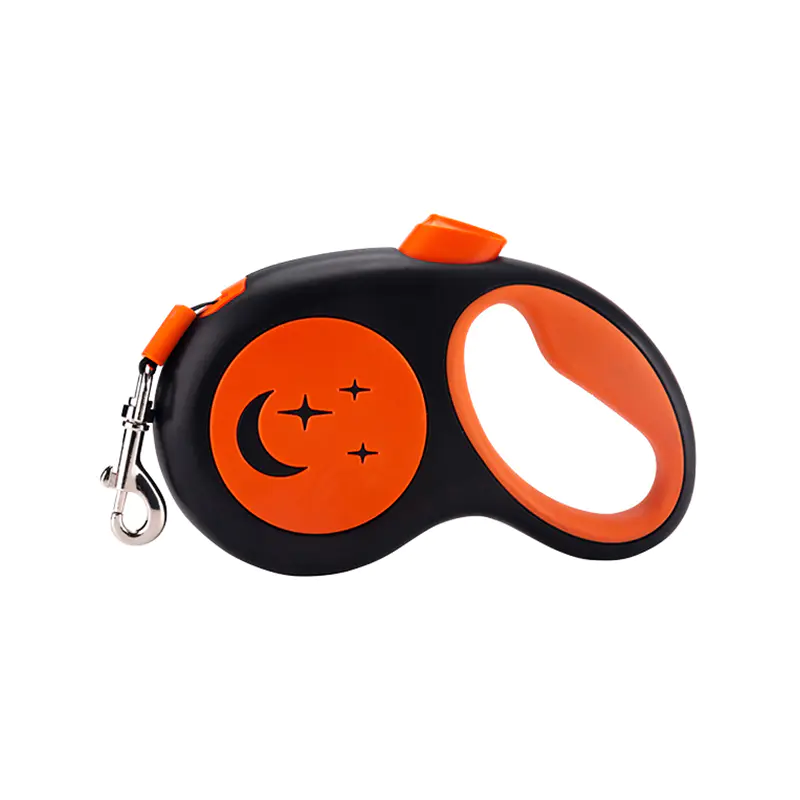
What Is a Pet Leash, and Why Does the Introduction Matter?
At its core, a leash is a length of material, usually nylon, leather, or woven fabric, that attaches to your pet's collar or harness on one end and your hand on the other. That is the mechanical answer. The more interesting answer is what it represents to your animal.
For many pets, especially dogs, it becomes deeply tied to emotional states. Attach it before an exciting outing and it triggers a full-body frenzy. Use it during a stressful vet trip and it absorbs that anxiety too. Neither of those associations helps when you simply want a quiet walk around the block. This is exactly why the introduction matters as much as the object itself. A pet that learns to see this tool as a neutral, unremarkable thing, just part of getting ready to go outside, is already halfway to walking calmly. One conditioned to treat it as a signal to explode with excitement has a much longer road ahead.
Does the Right Gear Actually Make a Difference?
Honestly, yes. Not in a magical way, but the wrong equipment creates unnecessary friction from the very start.
| Equipment Type | Works Well For | Worth Knowing |
|---|---|---|
| Flat collar | Pets that already walk without pulling | Can put pressure on the neck if a pet lunges |
| Front-clip harness | Dogs that tend to forge ahead | Redirects momentum rather than fighting it |
| Back-clip harness | Puppies, small breeds, nervous animals | Comfortable and easy to put on; less directional control |
| Slip lead | Brief practice moments | Requires good timing; not suited for all-day wear |
Beyond the hardware, a few small things go a long way: soft, pea-sized treats that can be delivered quickly, a line light enough to feel what your pet is doing through it, and a consistent spot where you always gear up. That last detail sounds trivial, but a predictable starting point helps your pet begin settling into the right headspace before you even step outside.
Before the Sidewalk: The Indoor Phase Nobody Wants to Skip
Here is something that surprises many owners: the first several sessions should not involve going outside at all. The outdoor world is a lot. Smells that have been building all night, a neighbor's car backing out, a squirrel. Trying to teach walking behavior and manage environmental overload simultaneously is genuinely unfair to your pet.
Start indoors instead.
- Put the harness or collar on without going anywhere. Let your pet wear it during dinner, during play, during nothing in particular. Remove the novelty.
- Once that feels normal, attach the line and let it drag on the floor while you supervise. Just that.
- Pick it up and walk around your living room. When your pet drifts naturally to your side or glances up at you, say a soft "yes" and give a treat.
- Practice stopping. Stand still. Wait for your pet to pause or turn toward you. Reward that moment.
None of this is glamorous. But a pet that has gotten comfortable with gear before facing the outdoors is a fundamentally different starting point than one who has not.
Getting Your Pet to Follow Instead of Lead
This is the heart of it. The skill being built is simple to describe and takes real repetition to install: staying near you should feel more worthwhile than pulling away.
Hold a treat at your hip. Walk a few steps. When your pet stays level with you, mark it and reward. When they rush ahead, stop. Not dramatically. Just stop moving. No tugging back, no frustrated calling out. Just stillness. The moment the line softens again, even slightly, take one step forward. That step is the reward. Forward movement only happens when the connection between you is relaxed. Short sessions work better than long ones here; five focused minutes twice a day outpaces a single exhausting thirty-minute stretch where both of you grow increasingly worn down.
What Happens When Things Go Wrong Outside?
They will. Even pets who nail the indoor practice hit the outdoor world and temporarily forget everything. That is normal, not a failure.
Pulling: Stop. Wait. Do not fight the tension; just refuse to participate in it. Your pet will eventually release the pressure, if only out of confusion, and the moment that happens, move forward. Over time, they figure out that a tight line goes nowhere and a loose one does.
Freezing: Crouching down and patting your leg tends to work better than pulling forward. Tossing a treat a foot or two ahead can break the paralysis too. If freezing happens repeatedly in the same spot, that environment is probably too stimulating for now. There is no shame in turning around.
Zigzagging and weaving: Keep your own movement steady and change direction often. When your pet has to watch where you are going in order to keep up, they stop treating the environment as the main event and start paying attention to you instead.
Why Temperament Changes Everything
A training approach that works beautifully for a relaxed golden retriever might get exactly nowhere with a reactive terrier. Worth acknowledging openly.
Anxious pets need more time at every stage, fewer surprises, and a lower bar for what counts as success. If a nervous dog manages three feet outside the front door without shutting down, that is a real win. Treat it like one. High-energy pets, on the other hand, often do better when they have burned something off beforehand. A few minutes of fetch before a session takes the sharpest edge off and makes it easier for them to actually hear you. Easily distracted pets are not being stubborn; they are just finding the world more interesting than you at that moment. Unpredictable direction changes, an animated tone of voice, and occasionally rewarding them for simply looking at you all help shift that balance over time.
How to Move Forward Without Burning Out Your Pet
Training fatigue is real. Pushing too hard leads to a pet who starts avoiding gear or shuts down mid-session.
- Three to seven minutes per session, several times a day
- End every session on something achievable, even if that means lowering the difficulty to get there
- Shift locations gradually as confidence grows: quiet yard before quiet street before slightly busier street
- On difficult days, go back a step rather than push forward
Progress is not linear. Some days your pet will surprise you. Other days they will seem to have forgotten every lesson entirely. Both are part of the process, and the pets that become genuinely good walkers are not the naturally talented ones. They are the ones whose owners kept showing up, consistently and without too much drama about the setbacks.
Mistakes That Quietly Set Things Back
A few patterns come up repeatedly with owners who are trying hard but not quite getting traction:
- Rewarding too late. The treat needs to land within a second or two of the behavior. Anything longer and the connection genuinely does not form the way it needs to.
- Starting in difficult environments too soon. A crowded park is not a training location for a pet who has not yet figured out quiet street behavior.
- Letting pulling work sometimes. If forward movement occasionally happens while the line is tight, the lesson learned is that pulling sometimes pays off. Consistency here is not optional.
- Training an already overstimulated pet. A dog who has been bouncing off the walls for an hour is not in a state to take anything in. The session starts before you clip anything on.
A Loose First-Week Framework
| Day | What to Focus On | Where |
|---|---|---|
| Day 1 | Wearing gear without going anywhere | Indoors |
| Days 2 to 3 | Line dragging, basic side-by-side steps | Indoors |
| Days 4 to 5 | Stop and start practice, rewarding check-ins | Indoors or quiet yard |
| Day 6 | First short outdoor attempt, low-traffic route | Quiet path or street |
| Day 7 | Review what worked; adjust the following week | Both |
Treat this as a rough shape, not a rigid schedule. Some pets move through it in a few days. Others spend two weeks on a single stage, and that is completely fine. The point is readiness, not hitting a timeline.
Walking a pet who actually stays with you, who glances up occasionally, who moves through the world with some ease rather than constant urgency, is genuinely one of the more satisfying parts of having an animal in your life. It does not happen by accident. It comes from gear chosen thoughtfully, from time spent indoors before rushing outside, from stopping when the line goes tight and waiting rather than fighting back. Small decisions, repeated consistently, add up to something real. If you are looking for equipment built to support this kind of deliberate training, Taizhou Opey Pet Products Co., Ltd. makes products designed with both animal comfort and owner experience in mind. A well-made tool does not replace the work, but it does make the work a little easier, and that matters more than most people realize when you are on day three and wondering whether any of this is actually going to stick.