
 English
 中文简体
中文简体 русский
Every morning, many pet owners replenish their automated drinking fountains, observing as fresh water flows down into the bowl. The soft splashing sound offers a sense of comfort, the motion seems clear and inviting, and pets typically approach with interest. Behind this everyday scene, however, gradual unseen shifts can develop over time. Numerous homes now use Pet Water Fountains for their ease, with the idea that steady circulation helps preserve cleanliness naturally. This view, though reasonable at first glance, does not entirely consider the interplay among flowing water, bacterial activity, and the regular inputs from pets as they drink.
What is a Pet Water Fountain?
A Pet Water Fountain acts as an automated water dispenser for cats and dogs, featuring a small pump that keeps water moving continuously instead of remaining still as in a standard bowl. The motion typically shows up as a gentle stream, a falling cascade, or a bubbling surface, which some animals appear to find more interesting or inviting.
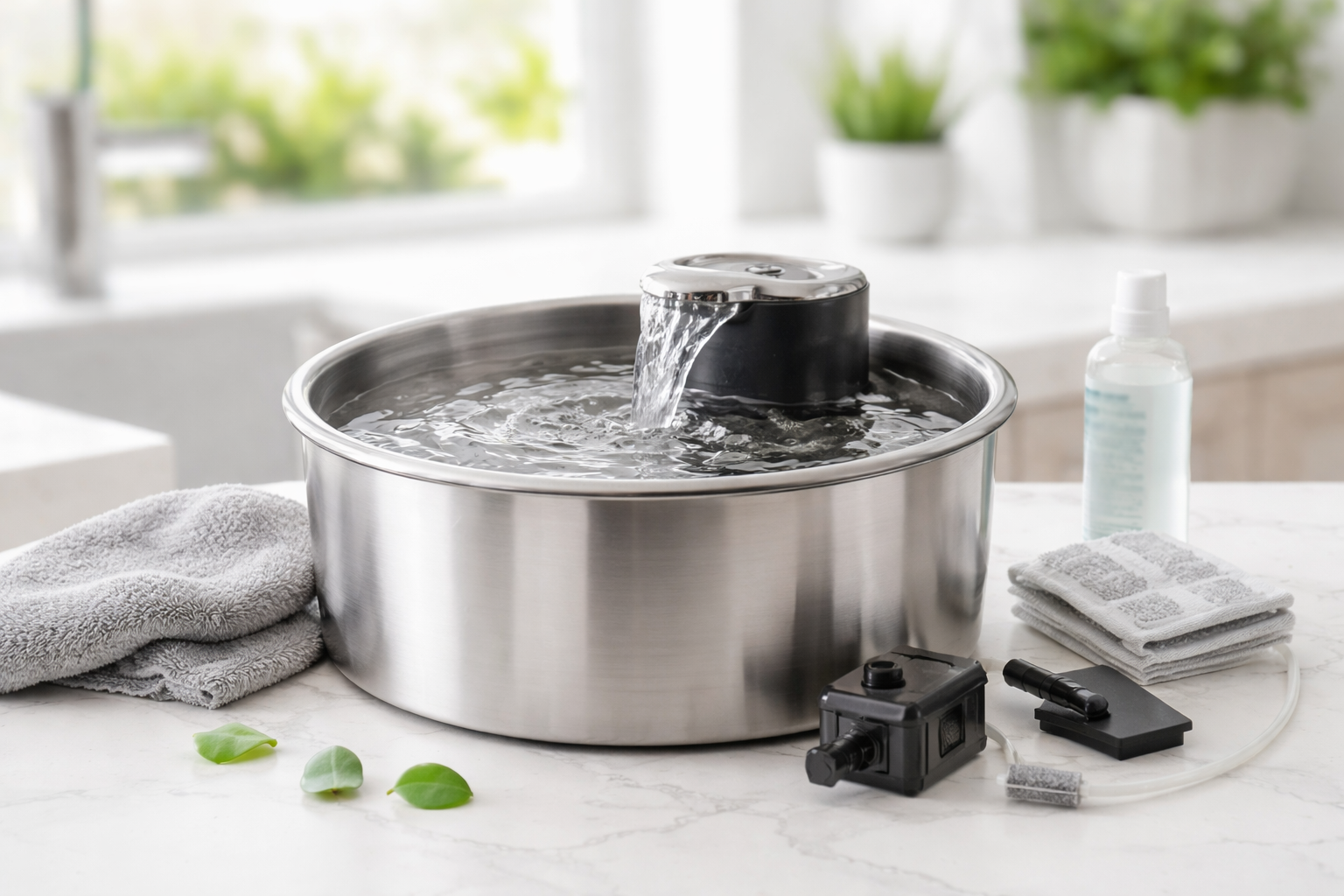
Common components include:
- A reservoir or base section that contains the water supply
- An electric pump that moves the water through the system
- A drinking area or bowl where the flowing water collects for pets to lap
- Filters, often a combination of foam to trap particles and carbon to help with taste and odors
- Tubing or pathways that carry the water from the pump back to the drinking surface or through additional levels
Owners sometimes select these fountains in the hope that the moving water may encourage pets to consume more, potentially aiding hydration—particularly for cats that show less interest in stationary water. The circulation is also intended to help slow down how quickly the water might become less fresh compared to an unchanged traditional bowl.
These fountains are available in different materials like plastic, stainless steel, or ceramic, and in styles that vary from basic single-level bubblers to taller, multi-level waterfall arrangements. They need a power source for the pump and involve ongoing care such as regular water replacement, cleaning of parts, and periodic filter changes.
Even though the water flows, regular maintenance remains necessary as pets can add saliva, bits of food, and hair during drinking, and internal surfaces may still develop bacterial layers over time.
Why Flowing Water Doesn't Mean Clean Water?
People often think that the constant flow in a Pet Water Fountain automatically keeps things fresh and pure, drawing a comparison to lively outdoor streams or big garden ponds where nature handles the cleanup. But small indoor fountains for cats or dogs function on a much smaller scale. They contain only a limited quantity of water—typically around a liter or so—and keep recirculating that same water over and over through tubes, the pump, and other internal parts. This ongoing loop gives bacteria plenty of chances to latch onto those surfaces, especially where pet saliva, tiny food remnants, or airborne particles get introduced, leading to the formation of biofilm.
The process begins as scattered bacteria settle onto the plastic, ceramic, or metal interiors, including hard-to-reach spots like pump parts and tubing walls. They start releasing a gluey substance that anchors them securely and soon attracts more microbes, building dense clusters shielded by a slimy matrix. This protective barrier resists ordinary flushing, so even dumping and refilling the entire fountain leaves behind entrenched colonies that promptly contaminate the new water by shedding bacteria. Warm room temperatures accelerate everything, particularly in hot weather or cozy homes, while saliva and organic traces from drinking sessions supply steady fuel for explosive growth. Fresh water poured in the morning can develop worrisome bacterial counts by the end of the day, often without any obvious signs like murkiness or bad smells showing up yet.
How Often Does Water Actually Need Changing?
How frequently you should swap out the water hinges on details many pet owners don't think about right away. One pet that drinks lightly produces far less mess than a group of animals hitting the fountain all day long. Every lap adds saliva, possible food bits, and other impurities, so higher usage speeds up spoilage dramatically. Just pouring in more water when the level dips skips over the real problem: the leftover volume already holds built-up organics and floating microbes.
For solid water quality, aim to completely empty and replace everything daily as a standard practice. Don't rely on looks or smell—crystal-clear water without any off odor can still carry heavy bacterial loads well before those red flags appear. Cloudiness or foul smells only signal that things have gotten seriously out of hand. Things like warmer house temperatures, mineral-heavy hard water that leaves scale for extra grip points, or food bowls placed nearby that drop more debris all tighten the safe timeframe considerably. Sticking to partial refills without full changes lets those microbial communities keep building gradually.
What Cleaning Schedule Actually Makes Sense?
A practical upkeep plan lines up cleaning efforts with how quickly various kinds of buildup happen—some in mere hours, others over longer stretches—striking a balance between thoroughness and manageability.
Daily routine covers:
- Pouring out every drop of old water—no topping off
- Giving the bowl and any easy-to-reach areas a good rinse with hot water
- Picking out visible bits like fur clumps or stray food
- Immediately filling with clean, fresh water
These fast steps cut short the earliest stages of bacterial takeover by clearing fresh nutrients before colonies get a strong foothold.
Weekly tasks involve:
- Breaking down any detachable pieces
- Thoroughly washing them using a gentle, animal-friendly cleaner
- Scrubbing any areas that feel slick or slimy
- Looking closely at tubes and crevices for emerging residue
- Making sure the pump operates freely without clogs
This level targets lingering biofilm that daily rinses miss, where that slippery coating points to settled communities that need physical removal to break apart.
Monthly thorough cleans include:
- Taking the whole unit apart, pump included
- Soaking parts in a solution meant to dissolve stubborn organic matter
- Carefully tending to impellers, tight spaces, and motor sections
- Checking for any cracks, erosion, or scale buildup that shelters bacteria
- Rinsing repeatedly to flush away all traces of cleaner
Pay close attention to the pump during these deeper sessions—hair can tangle around moving parts, minerals coat surfaces, and combined with organics, they reduce function and create prime bacterial hideouts if overlooked.
Tailor these timings to fit your home: places with several pets might shift weekly cleans to every four or five days, hard-water regions could need extra descaling more often, and plastic fountains generally demand stricter scrubbing than stainless steel models since biofilm sticks more stubbornly to plastic.
Do Filters Actually Keep Water Fresh?
Filters in pet fountains perform certain specific tasks, but they often fall short of the broader freshness expectations set by product descriptions. They handle targeted aspects of water quality rather than serving as a complete solution on their own, and they work best alongside regular cleaning rather than in place of it.
Carbon filters primarily capture some dissolved materials like chlorine, certain organic compounds, and elements that affect taste as water flows through the activated charcoal. This can make the water more palatable and may lessen a few types of contaminants. However, carbon does not eliminate bacteria, halt biofilm development on surfaces, or clear away all organic residues—particularly larger debris or protein-rich substances from pet saliva.
Foam pre-filters mechanically trap visible particles such as hair and food bits before they reach the pump. This helps protect the pump from damage and keeps larger items from re-entering the drinking area. Yet foam can quickly become loaded with trapped material, turning it into another spot where bacteria settle and grow. A visibly soiled foam filter holds more than just debris; it can support active bacterial populations.
Filters tend to lose effectiveness sooner than their stated lifespans suggest under typical household conditions. Factors like frequent use by multiple pets, higher levels of contamination, or hard water can reduce how long they function properly. There is no clear signal when a filter stops performing its intended role—it keeps allowing water to pass while providing less benefit than assumed.
Depending only on filtration and stretching out cleaning times can give a misleading impression of safety. Filtered water might taste noticeably better than the same water unfiltered in a neglected system, but improved taste alone does not indicate the water remains hygienic. Biofilm on internal parts continues to release bacteria even when filters are in place. Filters manage some concerns while leaving others untouched.
Recognizing When Your System Has Become Unsafe
Signs of contamination tend to appear gradually, and early ones can sometimes go unnoticed in busy routines. Paying attention to these cues can help avoid letting pets drink water that has noticeably declined in quality.
Unpleasant odors often stand out as a clear alert. A musty or pond-like smell points to substantial bacterial activity. By the point an odor becomes noticeable, the water has usually deteriorated quite a bit. Such smells arise from bacterial byproducts and breaking-down organic matter. Fresh water generally carries no detectable scent.
Cloudy appearance indicates suspended particles or possible bacterial growth. This might show as faint haziness that’s easy to overlook or more obvious murkiness. In either case, visible cloudiness suggests the water has moved beyond acceptable condition. While clear water is not guaranteed safe, cloudy water reliably signals poorer quality.
A slippery or slimy feel on surfaces points to developed biofilm. Touching the bowl interior or pump area and sensing slickness means bacterial communities have formed their protective layer. This coating resists simple rinsing and keeps introducing bacteria into the water.
Occasional shifts in how pets approach the fountain can hint at issues before other signs appear. Cats, often more particular about water, might start seeking taps or other sources if they detect off tastes or smells. Dogs could drink less or pause longer before lapping. Such changes sometimes reflect water quality concerns.
Altered pump behavior can also indicate buildup. Louder operation might come from debris affecting the impeller, weaker flow from partial blockages, or no sound at all from pump failure linked to accumulated material. These changes tie directly to internal conditions that influence both mechanics and water cleanliness.
The Material Factor: How Fountain Construction Affects Cleanliness
The materials used in a fountain can influence how readily biofilm forms and how thoroughly it can be removed during cleaning. This plays a role both when choosing a fountain and when caring for one already in use.
| Material | Biofilm Resistance | Cleaning Ease | Durability | Visibility |
|---|---|---|---|---|
| Plastic | Low | Moderate | Good | High |
| Stainless Steel | High | Easy | Excellent | Moderate |
| Ceramic | Moderate | Easy | Good | High |
| Mixed Materials | Varies | Difficult | Varies | Varies |
Plastic tends to allow biofilm to develop more readily. Even smooth plastic offers tiny surface irregularities where bacteria can attach, and scratches from use or cleaning add further spots. Plastic fountains may regain that slippery feel relatively soon after cleaning.
Stainless steel generally resists bacterial adhesion better due to its smoother, non-porous nature. Contamination tends to come off more completely during cleaning compared to plastic. Still, many steel fountains include plastic elements in pumps or fittings, leading to mixed-material setups with differing care needs.
Ceramic provides moderate resistance to biofilm along with the advantage of showing dirt more visibly on its glazed finish, which can encourage timely cleaning. Its heavier build helps keep it steady during use. Glazed ceramic cleans relatively well, though any unglazed areas might retain bacteria more easily due to porosity.
Fountains that mix materials create added maintenance complexity. For instance, plastic tubing joined to ceramic bowls or steel trim can have different cleaning demands per section. Junctions between unlike materials often trap moisture and debris, turning into areas prone to heavier contamination.
When Filters Stop Working and What Happens Next
Replacement intervals suggested on packaging offer broad estimates rather than fixed deadlines. How soon filters actually lose usefulness varies with factors like how often the fountain is used and the quality of the incoming water. Being aware of when filters no longer perform helps avoid the idea that simply having a filter in place keeps the water safe.
Activated carbon gradually becomes loaded with the substances it captures. After reaching saturation, it stops trapping additional contaminants, allowing water to pass through unchanged in terms of purification. The filter can continue to look unchanged on the outside, with no obvious sign that its capacity has been used up.
Foam pre-filters show clear buildup when covered in visible debris, but bacterial growth often begins well before the foam looks noticeably soiled. The same material meant to catch hair and particles can turn into an area where bacteria settle and multiply. Filters that have been in place for a while may end up adding bacteria to the water instead of keeping it cleaner.
Putting off filter changes leads to wider issues in the fountain. Restricted flow from clogged filters makes the pump strain more, which can produce extra heat and wear down the motor over time. Weaker circulation allows water to sit longer in parts of the reservoir, giving bacteria more opportunity to increase. Overall system function tends to drop when filters go beyond their useful period.
Some people try to extend filter use by rinsing them under water. Rinsing can clear loose debris from foam, but it does not renew the chemical trapping ability of carbon. A rinsed carbon filter remains saturated, and rinsed foam can still hold bacteria deeper inside its structure. This approach may give a sense of improvement without addressing the core limitation.
How Your Water Supply Influences Maintenance Needs
Tap water differs from place to place in mineral levels and treatment methods. These differences play a role in how fast buildup occurs and what kinds of deposits form inside pet fountains. Adjusting care routines to match local water traits can make maintenance more effective.
Hard water carries higher amounts of dissolved minerals such as calcium and magnesium. When the water moves through the system or evaporates slightly, these minerals can leave behind white, crusty layers on surfaces. Such scale creates textured spots that make it easier for biofilm to take hold, combining with bacterial growth to form harder-to-remove contamination.
Very soft water or supplies with strong chemical treatment can bring other considerations. Water with high chlorine levels starts out more sanitary but may wear on certain plastic parts over time. Chlorine tends to off-gas quickly once the water sits exposed in the fountain, reducing its ability to keep bacteria in check afterward.
Some owners provide filtered tap water or bottled water for their pets. This can cut down on mineral deposits and scaling, though it does not stop bacteria from developing due to saliva, food particles, or other organic material pets add during drinking. Even clearer or softer water still calls for the same level of regular cleaning to control biofilm.
Water temperature also affects both bacterial activity and mineral behavior. Cooler water tends to slow bacterial multiplication to some degree, while warmer conditions speed up both growth and scale formation. Most household fountains operate with water close to room temperature, which generally supports ongoing bacterial presence.
Creating a Maintenance System That Actually Functions Long-Term
Knowing the recommended steps is one thing; carrying them out regularly is another. The difference between planned routines and what actually happens day to day affects whether fountains stay reasonably clean or only look that way on the surface. Setting up patterns that last involves fitting them into daily life in ways that feel natural.
Tying fountain care to already established habits can make it easier to follow through. For example, rinsing parts while the coffee brews in the morning or swapping water during evening feeding times can turn maintenance into part of the regular flow rather than an extra chore.
Making the process straightforward helps cut down on reasons to skip it. Storing cleaning tools close to the fountain removes the step of searching for supplies. Fountains with simpler designs take less time to take apart for cleaning. Materials that respond well to washing can make the task feel less burdensome.
Household circumstances vary, so routines need to fit accordingly. A home with one pet and plenty of attention might handle more detailed steps comfortably. Busier settings with several pets often work better with pared-down approaches that still cover the essentials. Aligning the level of effort with what can realistically be sustained helps prevent patterns of starting strong, falling behind, and eventually giving up.
Visual aids can assist in keeping up with routines. A simple calendar placed nearby to note the most recent thorough cleaning can encourage follow-through. Having extra filters in sight acts as a cue for when to swap them out. These basic reminders help counter the slow slide into oversight that occurs when duties fade from daily awareness. The basic concept holds across various approaches: buildup tends to occur in expected ways, and steady actions can help manage it before it becomes an issue. Responding only once signs appear often indicates the quality has already dropped considerably. Ongoing care through set habits tends to support water that stays appropriate for use rather than barely adequate, helping provide pets with hydration that aligns with their needs.