
 English
 中文简体
中文简体 русский
Water bowls have been part of household routines for as long as people have kept companions indoors. Yet a quiet concern lingers in many homes: is my companion drinking enough throughout the day? Animals often show subtle signs of insufficient hydration that go unnoticed until health issues emerge. Modern living spaces, busy schedules, and natural drinking behaviors sometimes work against proper hydration habits. The Pet Water Fountain addresses these challenges by creating an environment that aligns with how animals naturally interact with water sources. Before deciding whether this device belongs in your home, understanding its mechanics, benefits, and practical demands helps ensure the choice matches your companion's needs and your daily reality.
What Is a Pet Water Fountain and How Does It Work?
At its heart, a Pet Water Fountain uses a small electric pump to keep water moving constantly. Instead of sitting still in a regular bowl until it's drunk or dumped out, the water flows in a continuous loop that grabs your pet's interest.
Most designs feature a large base that holds the water supply, a quiet pump that pulls water up from below, and a filter that catches bits of fur, food crumbs, and other debris. The water then spills out from the top in different ways—some models send it down in a steady stream, others create a bubbling pool, and a few let it fall like a small waterfall. Gravity brings it back to the bottom reservoir, and the whole process starts over again without stopping.
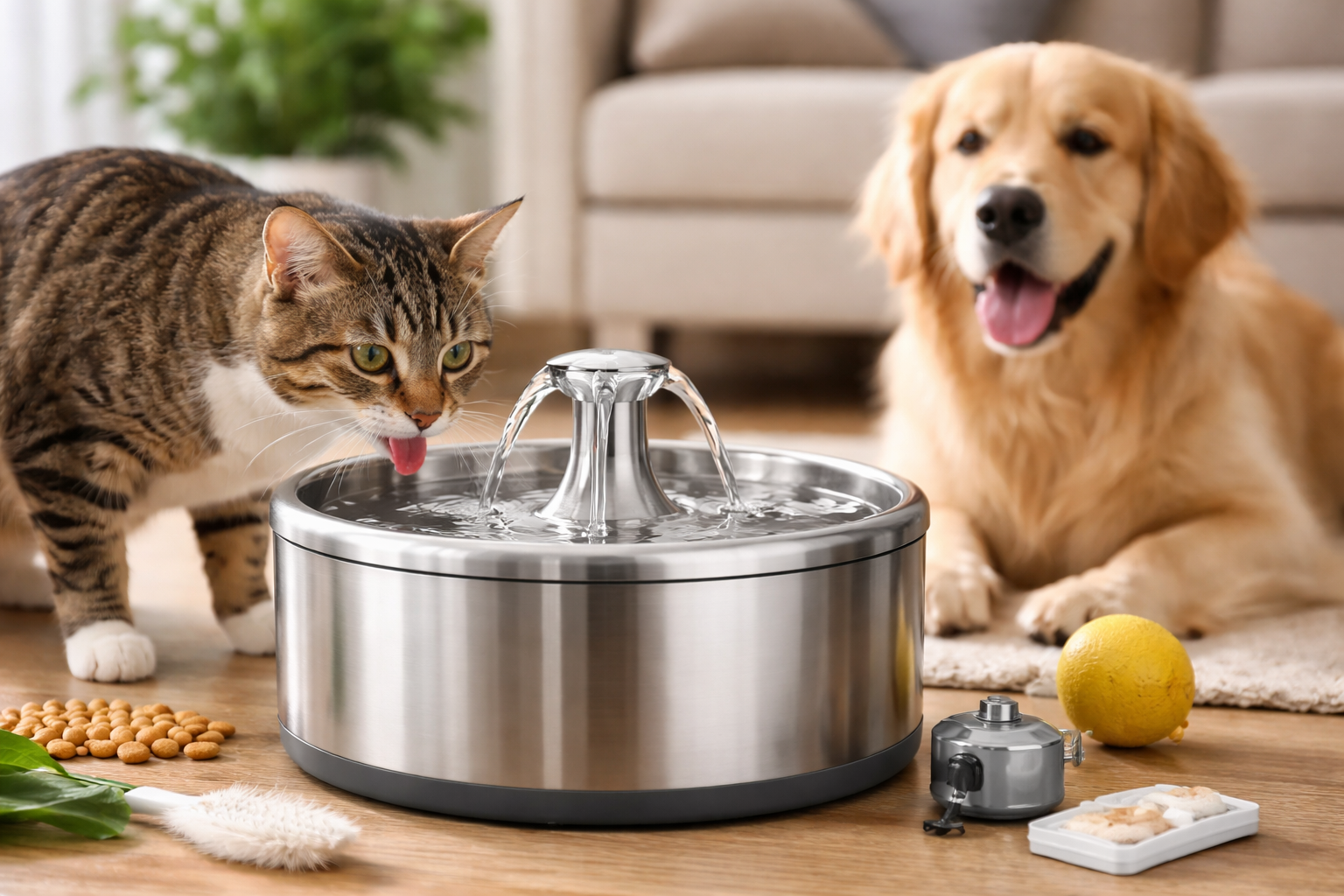
When working right, the pump stays fairly quiet, though exact sound levels differ from one brand to another. Filters often use activated carbon or similar materials to trap particles and cut down on smells. They plug into a regular wall outlet, and some newer ones include battery backup so they keep running during short power outages.
The nonstop movement stops water from going flat and stale like it does in a plain bowl. It also adds oxygen to the water, which many pets seem to find fresher and more appealing.
Why Running Water Is More Attractive to Pets
Natural instincts drive how pets choose where to drink. In the wild, flowing water usually means it's clean and safe, while still pools can collect harmful bacteria or parasites—so many animals evolved to favor moving sources over stagnant ones.
Cats show this preference especially strongly. Their wild relatives in dry areas learned to drink from streams or springs rather than risky standing water, and that habit sticks around even in house cats. That's why some cats skip their bowl but happily lap from a leaking faucet or running tap.
Dogs tend to be less picky overall, but the sight and sound of moving water still often encourages them to drink more than they would from a silent bowl left in the corner. For pets that don't hydrate enough on their own, that extra sensory pull can make a real difference in how much they take in.
The constant flow also stops the thin layer of slime that quickly forms on still water. Even though people can't see it, pets pick up on these subtle changes in smell and taste, which can turn them away from drinking.
Key Benefits of Using a Pet Water Fountain
Switching to a circulating fountain brings several real advantages over standard bowls:
Enhanced Hydration Patterns: The motion draws pets back to drink more often during the day instead of ignoring a still bowl. This helps especially with animals that tend to drink too little on their own.
Maintained Freshness: Moving water stays noticeably fresher longer, and the built-in filter keeps debris from building up and clouding the supply between full refills.
Reduced Bacterial Growth: Flowing water gives bacteria fewer chances to settle and multiply compared to standing water, while the filter pulls out organic bits that would otherwise feed germs.
Convenience for Busy Schedules: Bigger tanks need refilling less often, and filtration stretches the time between complete water swaps—though you still need to clean it regularly.
Temperature Regulation: The circulation keeps water from warming up as fast in warm rooms or sunny spots, so it stays cooler and more inviting.
Not every pet will love the change right away, but these improvements hold up well when the fountain gets proper care.
Is a Pet Water Fountain Safe for Daily Use?
It's natural to worry about having an electric device around water where pets wander freely. The good news is that well-made fountains go through safety checks and include features to keep risks low.
Pumps usually run on low-voltage adapters that step household electricity down to safer levels. Electrical parts stay sealed against splashes during normal use, and better models have sensors that shut the pump off automatically if the water gets too low to avoid overheating or dry running.
The materials used make a big difference in everyday safety and hygiene. Food-grade plastics resist scratches where germs could hide, though cheaper ones wear faster. Stainless steel stands out for being tough, easy to clean, and naturally resistant to bacterial buildup thanks to its smooth finish. Ceramic fountains add stability and look nice while staying just as hygienic as steel.
Consistent cleaning stops slime, scale, or mineral deposits from affecting water quality over time. Keep the cord out of chewing range and away from tripping hazards, and watch your pet during the first few days to make sure they don't try to paw at or knock the unit around.
Types of Pet Water Fountains Explained
| Material Type | Durability | Cleaning Ease | Weight | Hygiene | Price Range |
|---|---|---|---|---|---|
| Plastic | Moderate | Easy | Light | Good if BPA-free | Lower |
| Stainless Steel | High | Moderate | Medium | Very Good | Higher |
| Ceramic | High but fragile | Moderate | Heavy | Very Good | Medium-High |
Plastic Models give you easy handling and lighter weight while keeping the price more affordable than most alternatives. They make sense as a trial run to check if your pet actually likes the flowing water before you spend more on pricier builds. Scratches do show up after repeated use, though, and a handful of pets notice or dislike any lingering plastic scent or slight static feel. Look strictly for BPA-free models labeled as food-safe to stay on the safe side.
Stainless Steel Units hold their shape against scratches and never hang onto smells or marks. They keep performing well through years of regular use, so the bigger starting price pays back over time. The cool metal feel in warmer weather appeals to plenty of pets who seem to drink more readily from it. Use only soft cloths or mild cleaners to protect that smooth, shiny surface during washings.
Ceramic Options look great and bring some real advantages to the table. The extra heft stops them from tipping no matter how eagerly your pet goes at the water. Smooth glazed layers wipe down quickly and keep the water tasting neutral. The catch is how breakable they are—a solid bump or accidental drop can easily lead to chips or full cracks.
A number of companies mix different materials together, like fitting stainless steel drinking areas into plastic frames or setting ceramic bottoms beneath metal tops, aiming to pull together the strongest traits from each type.
How to Choose the Right Pet Water Fountain for Your Pet
Selection criteria should match your specific household circumstances rather than following generic recommendations:
Capacity Considerations: Size the holding tank according to how many pets share it and the total amount they drink daily. One little pet can handle a smaller tank just fine, but a house with several bigger animals calls for much more storage. Think realistically about how often you want to refill based on your normal day.
Noise Tolerance: Pump design controls how much sound comes out. Cheaper versions tend to hum, bubble, or gurgle in noticeable ways that can bother in calm households. Better pumps stay whisper-quiet. Put silence first if you plan to keep the fountain in a bedroom, office, or any quiet zone.
Maintenance Requirements: Taking apart different models for cleaning ranges from simple to fairly involved. Some come apart in just a couple of steps, while others have numerous pieces that take longer to handle. Check ahead on filter change intervals and how readily you can buy replacements so you don't end up with surprise costs or supply issues.
Flow Pattern Preferences: Take note of how your pet already drinks from bowls, taps, or other spots. Gentle lappers often lean toward calm streams, but pets that splash or play tend to go for livelier bubbles or falls. Adjustable settings let you dial in the right flow once you see what clicks with them.
Space and Placement: Get exact measurements of where you want to put it before ordering. Certain fountains have wider bases that crowd small spaces like apartments. Also double-check outlet locations and whether the operating sound matches the room's usual quiet level.
Common Mistakes People Make When Buying a Pet Water Fountain
Avoiding these missteps improves the likelihood of satisfaction:
Size Miscalculation: Grabbing one too tiny for multiple pets means endless refills and constant irritation. Flipping that around, picking something oversized just eats up room when you've only got one small pet using it.
Filter Oversight: Skipping the step of confirming replacement filter stock can cause real headaches down the line. Some brands quietly drop support for older models, leaving you with a fountain you can't keep running without tracking down rare or mismatched parts.
Cleaning Difficulty Underestimation: Designs packed with narrow spaces and lots of fiddly bits turn routine cleaning into a drawn-out job. Plenty of people ease up on upkeep once they see the real effort, which lets water quality slip.
Noise Assumption: You can't count on every fountain staying quiet. Digging into reviews that specifically call out the noise level helps you skip ones that prove too loud for the calm setting you had in mind.
Aesthetic Priority: Going mostly by looks risks ending up with an eye-catching piece that's clumsy to use or hard to maintain. Practical function needs to lead, with style playing a supporting role rather than running the show.
How to Clean and Maintain a Pet Water Fountain Properly
Proper maintenance extends fountain lifespan and ensures water quality remains high. Complete disassembly and thorough cleaning should occur weekly, though some owners manage with biweekly schedules depending on water hardness and animal shedding.
Run warm water over all the pieces and add a drop of mild dish soap to break up slime layers and stuck-on bits. Spend extra time on the pump area since that's where fur clumps and debris pile up fastest. A slim brush reaches into intake slots and awkward corners without trouble. Stay away from strong detergents or scratchy tools that could mar surfaces or leave behind traces.
Follow the maker's timing for filter swaps—most call for changes every few weeks up to a couple of months. Keeping tired filters in place cuts their effectiveness and often slows the water movement. Keep a couple spares around so you never hit a gap.
Hard-water locations build scale quicker. Letting affected parts soak in white vinegar lifts those mineral crusts from steel and ceramic easily. Plastic sometimes holds the vinegar smell, so give it several good rinses afterward.
Keep an eye out for hints that cleaning time has come sooner: sluggish flow, louder humming, obvious film appearing, or your pet suddenly passing on the fountain. Those signs usually mean you should clean more regularly to hold onto fresh, inviting water.
Potential Downsides and How to Avoid Them
Noise Development: Even good pumps tend to get noisier as time passes when scale builds up inside or parts start to wear down. Staying on top of regular cleanings and swapping the pump when needed keeps things running quietly.
Mineral Accumulation: Hard tap water drops behind crusty buildup that clogs parts and makes scrubbing tougher. Switching to filtered or distilled water cuts way down on this problem, even though it means spending a bit extra and handling one more step.
Power Dependency: When the electricity goes out, the fountain stops moving water and basically turns into a regular bowl until things come back on. Some models come with battery backups, but those bring their own added setup and upkeep.
Maintenance Time: These fountains demand more work than people sometimes expect compared to plain bowls. Depending on the design, a full weekly clean usually takes anywhere from fifteen to thirty minutes.
Bacterial Risk with Neglect: If you skip cleanings past the recommended schedule, bacteria can actually grow faster in a dirty fountain than in a bowl you change daily. The whole advantage hinges on keeping up with the routine without fail.
Understanding these limitations allows informed decisions about whether the benefits outweigh the inconveniences for your particular situation.
Who Should Consider a Pet Water Fountain and Who Might Not
Certain circumstances make these devices particularly worthwhile:
Cats usually see more upside than dogs because of their natural draw to running water and their common tendency to drink too little overall. Cats dealing with urinary tract problems or early kidney issues especially gain from anything that gets them to take in more fluids. Senior pets that move around less and drink less as a result often perk up at the sight and sound of flowing water.
Homes with several pets like the bigger tanks and steady filtering when multiple animals share one source. The constant motion stops any single pet from hogging the water and makes it easier for everyone to drink when they want.
People with packed schedules or frequent travel find real relief in larger capacities and built-in filtration that stretch out the time between full water swaps. Knowing the water stays fresher all day brings genuine reassurance beyond just saving a few minutes.
On the other hand, fountains aren't the best fit for every setup. Folks in tiny living spaces might have trouble finding room for one or dealing with any pump noise in close quarters. Anyone already stretched thin on time for pet care might prefer sticking with basic bowls that only need a quick daily rinse and refill. Pets that show no curiosity about moving water at all won't get anything out of the extra features.
Money plays a role too. The upfront cost plus regular filter purchases runs higher than a simple bowl. If your pets already drink enough with traditional methods, the extra expense may not bring enough improvement to feel worth it.
Are Pet Water Fountains Worth It in the Long Run?
Whether these fountains deliver real value comes down to how well they line up with your actual situation instead of chasing what's popular or what ads claim. For pets that consistently under-hydrate, the boost in water intake can support better urinary and kidney health, which often means fewer vet visits and a happier, more comfortable life down the line. That health payoff can easily outweigh the time and money put in. The convenience side matters most for owners with long workdays or irregular routines, but only if maintenance stays consistent—ignored fountains quickly become more trouble than help. Factor in the recurring cost of filters and the occasional pump replacement when you're planning ahead. The build quality counts far more than the sticker price at checkout. Going with durable stainless steel or ceramic models that hold up for years ends up cheaper than constantly replacing flimsy plastic ones. Easier cleaning with better materials also saves time and effort over the long haul.
In the end, the real question isn't whether fountains work for pets in general, but whether one fits your pet's habits and your daily life without creating new headaches. Does your pet already perk up at dripping taps or running streams? Are you or your vet worried about their current drinking amount? Can you stick to weekly cleanings for the foreseeable future? Does your budget handle the extra ongoing costs without strain? Straight answers to those points show whether a fountain adds meaningful value to your home or just piles on unnecessary work. For some pets and owners, a plain bowl stays the smartest choice, while others find this updated take on hydration genuinely helpful.