
 English
 中文简体
中文简体 русский
Every pet owner has been there: your dog just came in from a muddy walk, your cat has been weaving between your legs all afternoon, and you reach into the drawer for a brush — only to pause, unsure whether the tool in your hand is actually right for what you are about to do. It happens more often than most people admit. The Opey Pet Brush line was designed with exactly this confusion in mind, drawing a clear line between tools built for deep coat work and those built to comfort, calm, and connect. A Pet Brush is not one thing. It is a whole family of instruments, each shaped by a specific purpose, and using the wrong one — or using the right one badly — can make the difference between a pet that leans into your hand and one that disappears under the bed. This guide covers what each tool type does, why coat biology matters more than most owners realize, and how to build a brushing routine that actually works for both of you.
What Is a Pet Brush? Definitions, Coat Science, and Why It All Matters
Before anything else, it helps to understand why brushing is worth doing at all — and the answer goes deeper than a shiny coat.
When you brush a pet, you are doing several things simultaneously. Loose hairs, dead skin flakes, and accumulated dander lift away from the coat and transfer to the brush rather than drifting onto your furniture and floor. The bristles or nubs physically stimulate the skin surface, encouraging blood flow and prompting the sebaceous glands to release natural oils, which travel down the hair shaft and give the coat its characteristic gloss. For cats especially, regular brushing can noticeably cut down on hairball formation — the loose fur ends up in the brush instead of being swallowed during self-grooming. There is also a practical health angle: every brushing session is a chance to scan the skin for anything unusual. Redness, dry patches, unusual bumps, evidence of fleas or ticks — these are all easier to catch when your hands are already moving slowly and deliberately across the body. Not every lump signals something serious, but finding one early and checking with a vet is always worth the effort.
And then there is the bonding dimension. A calm, consistent brushing routine builds real trust. Grooming sessions that include soft praise and the occasional treat teach the animal to associate your hands and the tool with something pleasant rather than something to endure. That association pays dividends later, particularly when veterinary handling or more intensive grooming becomes necessary.
Hair vs. Fur — and Why the Difference Changes Which Tool You Need
The words "hair" and "fur" tend to get used without much distinction, but they describe coats with genuinely different behavior. Both are built from keratin, both grow from follicles, and both vary enormously in color, density, and texture. The distinction lies in how long each actively grows. Hair has a longer active growth phase — which is why Poodles, Yorkshire Terriers, and Maltese dogs need periodic trimming. Their coats simply keep going. Fur cycles through more quickly, shedding more often and more heavily, as anyone who owns a Labrador or a German Shepherd can confirm.
Beyond hair versus fur, there is the question of whether your pet has one coat layer or two. Every dog and cat has a topcoat — the outer layer that provides color, weather resistance, and protection from sunlight, dirt, and moisture. Some animals also carry an undercoat: a dense, shorter, and much thicker layer sitting close to the skin, whose job is to trap heat and regulate body temperature. Corgis, Huskies, Bernese Mountain Dogs, and many other working breeds are double-coated. Dalmatians, Boxers, and Poodles are single-coated. Understanding this distinction is not just trivia. It directly shapes which tools will work and which will cause frustration — a brush that glides beautifully through a single short coat may barely skim the surface of a dense double coat, missing the packed undercoat where mats and trapped shed fur actually accumulate.
The Two Main Tool Categories
Two fundamentally different tool philosophies exist side by side in the grooming world, and most pet owners end up needing at least one of each.
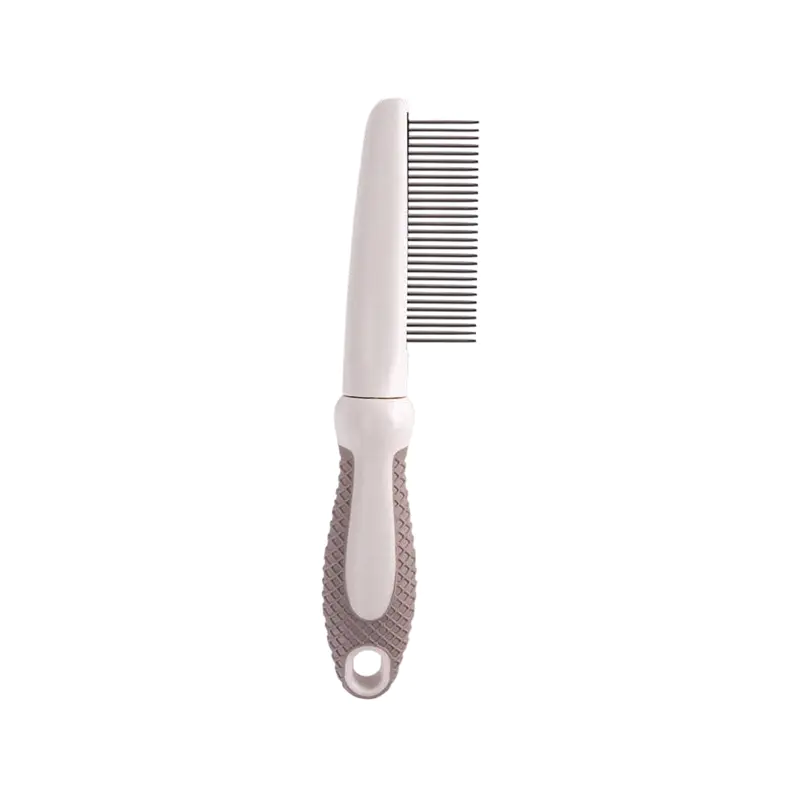
Grooming Combs — which include slicker brushes, pin brushes, bristle brushes, and rakes — are functional instruments. Their purpose is to do something active to the coat: lift and remove shed fur, separate tangled strands, reach through the topcoat into the undercoat, and carry away debris. The working surface is firm. Metal pins, hard plastic teeth, or tightly packed nylon bristles are designed to grip hair and do work on it. The sensation, when used correctly, is purposeful pressure rather than gentle touch. These tools clean. They prevent matting. On double-coated breeds during heavy seasonal shedding, a quality rake or deshedding brush can pull out remarkable quantities of loose undercoat that would otherwise end up on every surface in your home.
Massage brushes — rubber curry combs, silicone mitts, nodule brushes — operate on a different logic entirely. The surface is soft and yielding: flexible rubber or silicone nubs that compress against the skin rather than penetrating through the coat. The goal is not removal but stimulation. Blood circulation improves. Natural oils spread more evenly. The physical sensation for the animal is much closer to being petted than being groomed, which is why nervous animals, bath-resistant cats, and puppies encountering brushing for the first time often tolerate a massage tool long before they accept anything firmer. These tools are also genuinely useful during bathing — the rubber nubs work shampoo lather through the coat in a way that hands or a grooming brush cannot, and many animals that dread the bath will visibly relax once a rubber mitt comes out.
The sharpest summary of the distinction: grooming tools interact with the hair; massage tools interact with the skin.
Side by Side: What Each Tool Actually Does
Texture and physical build tell you a lot before the tool even touches your pet.
| Feature | Grooming Brush | Massage Brush |
|---|---|---|
| Primary purpose | Removes loose fur, detangles, smooths coat | Stimulates skin, spreads natural oils, calms pet |
| Working surface | Metal pins, firm nylon, or hard plastic bristles | Soft rubber or silicone nubs |
| Coat penetration | Deep — reaches undercoat on double-coated breeds | Surface — stays at skin level |
| Pressure level | Moderate to firm | Light to moderate |
| Shedding control | Strong | Mild to moderate |
| Detangling ability | Good to strong | Very low |
| Oil distribution | Moderate | High |
| Bonding effect | Moderate | High |
| Works when wet | Not recommended on tangled coats | Yes — excellent during bathing |
| Ideal timing | Pre-bath, post-walk, shedding season | Daily calm sessions, bath time, anxious moments |
Run a grooming brush through your own hair and you feel immediate resistance — pins catching strands, working through even the slightest knot, pulling gently at the root. That sensation is the tool doing its job. Draw a rubber massage brush across your forearm and you get something else entirely: a yielding press, the nubs flexing without any grip. The gap between those two experiences is exactly the gap between what each tool achieves on a pet's coat and skin.
When Should You Use Each Tool?
Timing shapes outcomes as much as tool selection does.
- Before a bath: A grooming brush removes loose fur and surface debris so coat clumps do not form during washing. A few minutes here makes the bath more efficient and the coat easier to rinse.
- During a bath: Rubber and silicone massage tools are built for this moment. The nubs push shampoo lather evenly through the coat and provide a calming physical sensation that, over several sessions, can turn a bath-resistant animal into one that seems almost to enjoy the process.
- After a bath, once the coat is dry: Return to the grooming brush to smooth, detangle, and finish. Wet coats are fragile — never use firm pins or tight bristles on tangled wet fur.
- Daily maintenance: A two to three minute massage brush pass takes almost no time and keeps the skin stimulated, the oils moving, and the animal comfortable with regular handling.
- Seasonal shedding peaks: This is when the grooming brush earns its keep. A quality rake or slicker brush used regularly during heavy shedding seasons pulls out the loose undercoat before it migrates to every soft surface in your home.
Pros and Cons — in Plain Language
Grooming brush advantages:
- Handles shedding and tangling more effectively than any other single tool
- Keeps longer coats from developing painful mats
- Distributes coat oils and leaves the coat lying flat and clean after each session
Grooming brush limitations:
- Firm pins can scratch or irritate sensitive skin if pressure is too heavy
- Some animals find the sensation uncomfortable, particularly around the belly, legs, and ears
- Requires more technique to use safely than a massage tool
Massage brush advantages:
- Tolerated well by most animals, including those that resist traditional grooming
- Builds positive associations with being touched and handled over time
- Doubles as a bathing tool; performs well on wet and dry coats alike
Massage brush limitations:
- Cannot detangle or manage heavy shedding effectively on its own
- Does not reach the undercoat in thick or double-coated breeds
- Not a substitute for regular, thorough grooming when coat management is actually needed
Does Your Pet Have Hair, Fur, One Coat, or Two? Why It Changes Your Tool Choice
It sounds like a pedantic question. It is not.
A Poodle and a Labrador are both dogs. Both shed to some degree. Both benefit from regular brushing. But the tools that work on one will underperform — or actively frustrate — when used on the other. The Poodle's continuously growing hair is single-layered, prone to tangling, and needs a pin brush or slicker to stay clear of mats. The Labrador's short, dense double coat sheds heavily and needs a bristle brush for surface maintenance plus a deshedding tool several times a year to manage the undercoat properly. Using a deshedding rake on a Poodle would be pointless. Using a light pin brush on a shedding Husky would barely scratch the surface.
The same logic applies to cats. A Maine Coon with its thick semi-longhaired double coat needs committed daily pin brush work during shedding season and a slicker around the collar and haunches where mats tend to anchor. A short-haired Domestic Shorthair needs almost nothing beyond a rubber massage glove two or three times a week — and may self-groom so effectively that the owner's job is mainly about bonding and skin health rather than coat management.
Knowing your pet's coat type — single or double, hair or fur, short or long — is the foundation of every useful tool decision you will make.
Inside the Tool: Anatomy Worth Understanding
Each component of a brush serves a function, and understanding the parts helps you evaluate tools you have never handled before.
The working surface is the business end. On Grooming Comb:
- Slicker brush pins: Fine, angled wire tines set closely together. The angle and spring in the wire determines how aggressively the tool grips. Good for detangling and removing loose fur; slightly too firm for very sensitive or thin-coated animals if used with heavy pressure.
- Pin brush pins: Rounded or rubber-tipped metal pins in a cushioned pad. The cushion absorbs some force, making this gentler than a slicker and well suited to longer, silkier, or wavier coats.
- Bristle brush fibers: Short, densely packed natural or synthetic bristles. Primarily a finishing and polishing tool — great for short coats and for adding shine after a session with a firmer instrument.
- Rake or deshedding teeth: Wide-spaced, deeper-reaching tines designed to penetrate and pull from the undercoat. Essential for double-coated breeds during shedding season; unnecessary and potentially irritating on single-coated animals.
On massage brushes, the surface is rubber or silicone nubs — rounded, flexible, completely non-sharp. The height and density of the nubs affects how deeply they press against the skin. Taller, more widely spaced nubs provide a deeper massage sensation; shorter, denser nubs feel softer and work especially well as lathering tools during bathing.
The pad connects the working surface to the handle. A firm pad transmits pressure directly; a cushioned pad absorbs some force and reduces the risk of pins catching skin if the brush tilts unexpectedly. The handle shapes how your hand fatigues over a longer session — a contoured, palm-filling handle is noticeably more comfortable than a thin flat one, particularly for owners with dogs that need extended grooming time.
A Note on Hybrid Tools
Some tools combine a firm pin side with a soft bristle or rubber side on a single double-sided handle. These can reduce the number of tools you keep on hand. The trade-off is real, though: neither side performs as well as a dedicated single-purpose tool. If your pet has specific coat challenges, two separate instruments will consistently produce better results than one compromise tool trying to do both jobs.
How to Choose: A Framework Worth Actually Using
Faced with a wall of brush options, most owners pick based on shape or price. There is a more reliable approach.
Start with coat type and length. This single factor narrows the field immediately. Short, single-coated animals can be well maintained with a bristle brush and a rubber massage tool. Medium to long, single-coated animals need a pin brush as their primary instrument. Thick, double-coated animals need a pin or slicker brush for regular work and a rake or deshedding tool for seasonal use.
Factor in skin sensitivity and temperament. An anxious, touch-sensitive animal needs a gentle entry point. Starting with a rubber massage tool for the first several weeks — building positive associations before any firmer brush appears — dramatically reduces long-term resistance. A relaxed, confident animal that has been brushed regularly since early life can usually move directly to whatever grooming tool the coat requires.
Match the tool to the goal of each specific session. Not every brushing session needs to accomplish the same thing. A quick pre-bath pass calls for a grooming brush. A post-thunderstorm calming moment calls for a massage tool. A seasonal shed-out on a double-coated dog calls for a rake. Having two or three tools and switching between them based on the day's need is not over-complicating things — it is using each instrument for what it was actually designed for.
Think about ergonomics and maintenance. A tool you find uncomfortable to hold will not get used consistently. A tool that is difficult to clean will accumulate fur and oils until it transfers grime back onto a freshly brushed coat. Self-cleaning mechanisms and smooth rubber surfaces that rinse in seconds have a real advantage in everyday life over technically superior tools that are a nuisance to care for.
Coat and tool matching at a glance:
- Short, fine single coat → Rubber massage brush (daily) + soft bristle grooming brush (two to three times per week)
- Medium wavy or silky coat → Pin brush (several times per week) + rubber massage tool as warm-up
- Long, tangle-prone coat → Pin brush daily, slicker brush for mat-prone areas, rubber massage brush before each session
- Thick double coat → Pin brush (regular), rake or deshedding tool (seasonal), rubber massage brush as warm-up
- Any coat, anxious animal → Rubber massage tool only for the first two to four weeks before introducing any grooming tool
Using Each Tool Safely: Step by Step
Working with a Grooming Brush
The most common mistake owners make is using too much force. The tool is designed to work with light, consistent strokes — not pressing down. More pressure does not mean cleaner results. It means a higher chance of pin tips contacting the skin and causing irritation that, over time, leads to avoidance behavior.
- Before touching the brush to the coat, scan with your hands. Run your fingers slowly through the fur and feel for any dense clumps or tight knots. If you find a mat, work a small amount of coat conditioner into it with your fingers before the brush comes near it. Pulling a slicker brush through an undetected mat causes real pain and can undo weeks of positive association in a single session.
- Hold the brush at a shallow angle — roughly 30 to 45 degrees — rather than flat against the coat. This keeps the pin tips oriented away from the skin surface and reduces scratch risk.
- Work in short, overlapping strokes of four to five inches. Start at the head or neck and move toward the tail; leave the belly and inner legs for last, since these areas tend to be more sensitive. Long sweeping strokes feel efficient but miss undercoat sections and apply uneven pressure.
- Follow the direction of hair growth in almost all circumstances. The exception is during a deliberate deshedding pass on a double-coated breed — but even then, always follow with several smoothing strokes in the natural direction afterward.
- Stop and check the skin every few minutes, especially with older animals or those with thinner coats. Redness, small scratches, or skin that looks irritated should end the session immediately.
- Finish with a soft bristle brush to smooth the coat and distribute the surface oils the session has stirred up.
Worth knowing: If your pet starts to flinch, turn away, or tuck their tail, that is the signal to stop — not to push through. Ending on a calm note, even a short session, keeps the next one from becoming a struggle.
Working with a Massage Brush
Speed and pressure are the two variables to manage here, and both should stay low.
- Begin at the back and sides. These are the areas most animals tolerate first. Use slow, circular motions, letting the weight of your hand alone carry the nubs into contact with the skin. No additional downward force is needed.
- Read the animal's response carefully. Leaning in, a relaxed jaw, half-closed eyes — these are good signs. Stiffening, flattened ears, and a sudden stillness that looks less like calm and more like bracing are signals to slow down or move to a different area.
- Move gradually into less comfortable zones — the chest, the base of the tail, eventually the legs and paws. Never force contact in areas the animal is actively avoiding. Patience here is not optional; it is the whole strategy.
- Keep early sessions short. Two to three minutes is genuinely enough for the first several weeks. The point is not thoroughness — it is the positive association. Length comes later, once the animal reliably relaxes into the contact.
- During bath time, apply shampoo and then work the rubber brush across the coat in slow, circular sweeps. The lather reaches deeper than hands alone, and most animals that resist bathing find the sensation noticeably more pleasant once the rubber tool replaces direct hand scrubbing.
Bringing a Fearful Animal Around
Some animals, particularly those with limited early handling or negative prior experiences, treat any brush with deep suspicion. A gradual, reward-paired introduction over one to two weeks is far more effective than trying to push through the resistance.
- Hold the tool near the animal without using it. Let them investigate at their own pace. Reward any calm sniffing or contact with praise and a small treat.
- Next session: touch the tool lightly to the back for a few seconds. Reward. End the session there.
- Each subsequent day, extend the contact slightly and expand the area covered — always ending before the animal shows any stress signals.
- Once the animal consistently remains relaxed during a full back and side pass, gradually introduce firmer pressure and larger coverage areas.
Restraining a reluctant animal does not speed this process. It slows it, or reverses it entirely, by replacing the animal's suspicion with something more active: fear. Let them move, follow gently, and treat every session as a deposit into a trust account rather than a task to complete.
Brushing Keeps More Than the Coat Healthy
It is easy to think of brushing as purely cosmetic — a way to reduce fur on the sofa and keep the coat looking presentable. The health benefits run considerably deeper.
Every session removes excess dander along with the loose fur. For households with allergy-sensitive members, this is meaningful: dander removed at the source during grooming is dander that does not become airborne and does not settle into upholstery and bedding. Regular brushing does not eliminate allergic reactions, but it can reduce their frequency and intensity in sensitive households.
There is also the skin health angle. A coat that is regularly groomed stays better aerated and is less likely to develop the kind of trapped moisture that encourages bacterial or fungal skin problems. For long-haired breeds especially, mats are more than a cosmetic issue — they pull at the skin continuously, cause real discomfort, and create warm, close pockets where irritation and infection can quietly develop. Consistent brushing prevents mats from forming in the first place, which is far less stressful for both the animal and the owner than trying to remove a fully formed one.
The circulation benefits are less visible but real. Massage brushes in particular stimulate blood flow to the skin surface. Better circulation supports the follicles that produce healthy coat growth and keeps the skin itself supple and resilient. Combined with the oil distribution that both tool types encourage, regular brushing contributes to coat condition in ways that no shampoo or topical treatment can fully replicate on its own.
Maintenance, Cleaning, and Knowing When to Replace
A dirty brush works against you. Fur, skin oils, and old product residue accumulate in the bristles and get redistributed onto the coat during the next session — effectively undoing part of what you just accomplished. Cleaning should be reflexive, not occasional.
After every session:
- Pull accumulated fur from pin and slicker brushes by hand or with a cleaning comb. Leaving it in the bristles shortens the tool's useful life and makes the next session less effective.
- Rinse rubber and silicone massage brushes under running water. These tools are nearly effortless to clean, which is one of their underappreciated practical advantages.
Once a week:
- Wash pin and slicker brushes with a drop of mild dish soap under warm running water, working the soap through the bristles with a second brush or your fingers. Rinse fully and set bristle-side down to air dry — drying bristle-up lets water pool in the pad and accelerates deterioration.
- Give bristle brushes a brief soak in warm soapy water, agitate gently, and rinse. Natural-bristle tools should not stay submerged long; prolonged soaking loosens the bristle base.
Storage matters more than most people realize. Leaving a damp brush in a closed drawer invites mold and odor. Direct sunlight degrades rubber and silicone over time. Storing a pin brush in contact with a rubber massage tool can permanently compress or deform the silicone nubs, shortening the life of both tools.
Signs that a tool needs replacing:
- Pin or slicker brush: pins that are bent, missing, or no longer spring back; a pad that has separated from the handle
- Bristle brush: bristles that splay, clump, or feel brittle rather than springy
- Massage brush: nubs that are cracked, torn, hardened, or no longer flex under light pressure
By Coat Type and Temperament: Practical Starting Points
Every animal is different, and the profiles below are starting points rather than fixed prescriptions. Trust what you observe in your own pet over any general recommendation.
- Short-haired shedding breeds (Labrador, Beagle, Boxer): A rubber massage brush handles daily upkeep and keeps loose fur off furniture. Add a firm bristle grooming brush two to three times a week for surface shed management. Spend the first week on massage brush only before introducing the bristle tool. Go easy on the underbelly, where the skin is thin and pressure sensitivity is high.
- Long-haired breeds prone to tangling (Golden Retriever, Maine Coon cat): Daily pin brush work is the foundation. A slicker brush targets the ears, collar area, and tail base where mats anchor first. Open every session with two minutes of rubber massage brush contact. Check for mats manually before every brushing, and do not skip sessions during seasonal coat transitions.
- Short-haired indoor cats: Self-grooming handles much of the work. A silicone glove or rubber massage brush two to three times a week is often enough, and folding it into regular petting keeps the cat from seeing it as a separate, unwanted activity. Firm pin tools are unnecessary and can irritate the thin skin on the stomach and inner legs.
- Small, touch-sensitive dogs (Chihuahua, Miniature Pinscher): These breeds need minimal coat management but careful temperament management. Introduce the massage brush as a petting tool for the first two weeks. Move to a firmer tool only when the dog actively leans into the contact rather than merely tolerating it.
- Double-coated northern breeds (Husky, Akita, Corgi): A quality pin brush for regular maintenance, a rake or deshedding tool during heavy seasonal shedding, and a rubber massage warm-up before each session. Never shave the coat — both layers together regulate body temperature, and shaving disrupts that system in ways that do not simply reverse once the coat grows back.
- Senior animals with aging or thinning skin: Softer tools and lighter pressure are the two adjustments that matter most. A pin brush with rubber-tipped or coated pins and a gentle rubber massage brush work well together. Reduce session frequency slightly and check the skin visually after each use, noting any new lumps, dry patches, or areas of sensitivity.
Myths That Lead Owners in the Wrong Direction
A massage brush can handle everything a grooming brush does. It cannot. Rubber nubs stimulate the skin and lift surface-level loose fur, but they do not detangle, do not penetrate the undercoat, and cannot manage heavy shedding in medium to long coats. Treating it as a complete replacement leads to coats that gradually develop mats and undercoat buildup that eventually requires professional intervention.
Daily grooming brush use is always safe. For animals with short, fine, or single coats, daily slicker or pin brush use can cause cumulative irritation. The massage brush is the safer daily-use tool; grooming brush frequency should match the coat's actual need rather than a default habit.
No flinching means no problem. Some animals — particularly those that have experienced rough handling — suppress discomfort rather than expressing it overtly. The absence of obvious distress is not the same as the presence of comfort. Checking the skin visually after every session catches issues that behavioral cues alone might miss.
Rubber tools are bath-only. Rubber and silicone massage tools work well on dry coats for calming sessions, daily maintenance, and bonding. Confining them to bath use leaves most of their value unused.
A Simple Plan Worth Starting Tonight
The choice between a grooming brush and a massage brush is not a competition with a winner. They do different things, serve different moments, and when used together in the right sequence — a gentle massage pass to settle the animal, a purposeful grooming pass to manage the coat — produce results that neither can achieve working alone. The single most practical takeaway: know your pet's coat type, pick tools that match it, start slowly with any animal that has not been brushed regularly, and clean your tools after every use. Five minutes with the right instrument, used with consistent light pressure and genuine attention to how the animal responds, will do more for coat and skin health than an occasional long session with whatever happens to be nearby. Build the habit, add the second tool once the first is trusted, and the routine will carry itself from there — turning what started as a chore into one of the more reliably pleasant parts of both your and your pet's day.