
 English
 中文简体
中文简体 русский
Walk into any pet store and you will see rows of grooming tools. Combs sit quietly among brushes and clippers. They look simple. Light. Familiar. Easy to understand at a glance.
Yet the path from Pet Grooming Comb Factory floor to store shelf is not as smooth as the product itself. Behind each comb, there is a chain of decisions, adjustments, and small compromises. Factories deal with issues that rarely appear in product descriptions.
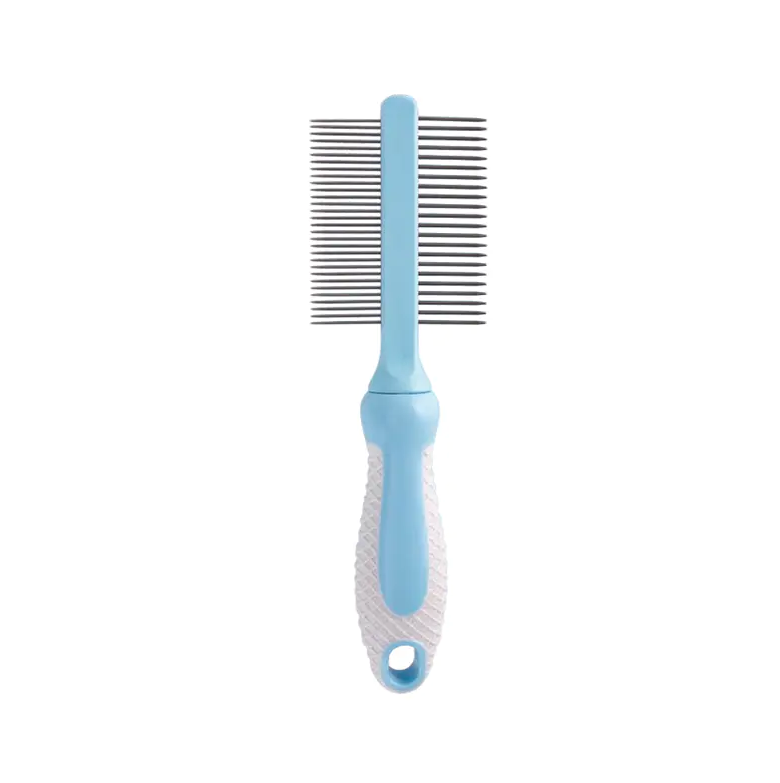
The challenges are not dramatic. They build slowly. They overlap. Sometimes they seem minor on their own, but together they shape how factories operate day to day.
Why does sourcing raw materials feel less predictable now?
Material sourcing used to follow a routine. Orders were placed. Materials arrived. Production moved forward. That rhythm still exists, but it feels less stable.
Factories now spend more time checking what arrives at the gate. Two batches of the same material may behave slightly differently. One might be easier to shape. Another may need more careful handling.
These differences do not always show up immediately. They appear during production. A comb may feel slightly uneven. The surface may not be as smooth as expected. Small details like these can lead to rework.
Sourcing is no longer just about finding suppliers. It is about managing variation. That takes time and attention.
How do shifting customer preferences complicate planning?
Customers today look more closely at everyday products. Even something as simple as a comb is judged on comfort, appearance, and ease of use.
Some buyers prefer a soft touch. Others want a firm grip. Some focus on color. Others care about how the comb moves through different types of fur.
These preferences do not stay fixed. They change quietly. What worked last season may not attract the same interest now.
Factories have to respond, but response takes time. Changing a design is not only about drawing a new shape. It affects molds, assembly steps, and inspection points.
Too many changes can slow production. Too few changes can make products feel outdated. That tension sits in the background of many decisions.
What makes consistent quality difficult to maintain?
Consistency sounds simple. In practice, it requires steady control over many small factors.
A grooming comb should feel the same from one piece to another. The teeth should be smooth. The edges should not feel sharp. The balance should remain stable.
Achieving this across large volumes is not always easy. Machines can drift slightly over time. Workers may handle parts differently. Environmental conditions may shift during the day.
Factories often rely on repeated checks. A batch is inspected. Then another. Even with these steps, small differences can appear.
The challenge is not only to detect variation, but to reduce it before it spreads across production.
How does labor influence everyday operations?
Machines handle part of the work, but people remain at the center of production.
Some tasks require attention to detail. Others depend on steady repetition. Workers move between these tasks, and each person brings a slightly different rhythm.
Factories sometimes deal with changes in staffing. New workers need time to learn. Experienced workers carry habits that are not always easy to replace.
When teams shift, production flow may change as well. Output may slow for a short period. Or adjustments may be needed to maintain consistency.
Labor is not just a resource. It is part of the production character of a factory.
Why is it hard to create clear product differences?
At a glance, many grooming combs look similar. The basic form does not change much. Handle. Teeth. A simple function.
Factories try to create variation. A different handle shape. A slight change in spacing. A new color combination.
These changes are subtle. Sometimes they are noticed. Sometimes they are not.
Larger design changes bring another issue. They may require adjustments in production tools or assembly steps. That adds complexity.
Factories have to decide how far to go. Staying close to familiar designs keeps production stable. Moving away from them introduces risk.
How do cost pressures quietly shape decisions?
Cost does not appear in the product itself, but it influences almost every step behind it.
Materials may become slightly more expensive. Energy use may increase. Labor conditions may shift over time.
Each change is small on its own. Together, they affect how factories plan production.
Some factories adjust by refining processes. Others look for ways to reduce waste. Some review design details to see where small savings can be made.
These decisions are not always visible. They happen in the background, shaping how products are made.
What challenges come with handling customized orders?
Customization sounds appealing. It allows buyers to request something specific. A different color. A modified shape. A unique packaging style.
From a Pet Grooming Comb Supplier perspective, customization adds steps.
Standard production follows a fixed path. Customized orders interrupt that path. Machines may need to be adjusted. Workers may need to switch tasks. Scheduling becomes more complex.
Small custom orders can be especially challenging. They require attention, but do not always fit smoothly into large production runs.
Factories must decide how much customization they can manage without affecting overall efficiency.
How do supply chain changes affect daily production?
The supply chain is often discussed in broad terms. In practice, it shows up in small delays and adjustments.
A shipment arrives later than expected. A component is held up in transit. Packaging materials are not available on time.
Each delay affects the production schedule. Work may pause. Or the sequence of tasks may change.
Factories try to build flexibility into their planning. Even so, not every disruption can be absorbed easily.
Supply chain issues are rarely dramatic. They are often quiet interruptions that accumulate over time.
Where do small details create larger problems?
A grooming comb is made of simple parts. Yet small details matter.
A slight variation in tooth alignment can change how the comb moves through fur. A minor surface inconsistency can affect how it feels in the hand.
These details are easy to overlook at the beginning. They become more noticeable after production scales up.
Factories need to pay attention to these points early. Adjustments made later are more difficult and may affect larger batches.
This is why detail control becomes part of everyday work rather than a final step.
How are factories adjusting their approach over time?
Factories do not solve all challenges at once. Adjustments happen gradually.
Some improve coordination between teams. Others refine production steps to reduce variation. Some spend more time reviewing materials before use.
There is no single method that works for everyone. Each factory adapts based on its own structure and experience.
Changes may seem small from the outside. Over time, they shape how smoothly production runs.
A closer look at ongoing pressures
| Area | Daily Impact on Factories |
|---|---|
| Material sourcing | Requires more inspection and flexibility |
| Customer preferences | Leads to frequent design adjustments |
| Quality control | Needs continuous monitoring |
| Labor conditions | Affects workflow stability |
| Product variation | Creates design and production trade-offs |
| Cost pressure | Influences process decisions |
| Customization | Interrupts standard production flow |
| Supply chain | Causes scheduling uncertainty |
Why do these challenges feel constant rather than temporary?
None of these issues appear suddenly. They build over time.
A small change in materials here. A shift in customer taste there. A delay in delivery. A minor adjustment in production.
Each factor seems manageable on its own. Together, they form a pattern.
Factories are not dealing with one challenge at a time. They are managing several at once, often without clear boundaries between them.
This is what makes the environment feel complex, even for a product as simple as a grooming comb.
What does this mean for how factories operate today?
Production today is less about fixed routines and more about steady adjustment.
Factories watch small signals. They respond to gradual changes. They try to keep balance between stability and flexibility.
The comb itself may remain simple. The process behind it continues to evolve in quiet ways.