
 English
 中文简体
中文简体 русский
If you share your life with a cat, dog, or any furry companion, you already know the feeling: you put on a fresh outfit, glance in the mirror, and notice fur everywhere. Whether you are heading to a work meeting, a dinner date, or a long-haul flight, keeping a reliable tool on hand can save you from an embarrassing moment. The Opey Hair Remover Roller has become a popular choice among pet owners and travelers precisely because it tackles this problem quickly and without fuss. A good portable roller belongs in every pet owner's daily routine — not just sitting on a shelf at home, but traveling with you wherever life takes you.
What Exactly Is a Pet Hair Remover Roller?
A pet hair remover roller is a durable, eco-friendly, reusable cleaning tool designed to collect fur, lint, and dander from furniture, clothing, and carpets without requiring adhesive refills. It typically features a cylindrical rolling head attached to a handle, working by making firm contact with fabric surfaces to gather loose fibers in one smooth, controlled motion. Most types operate through either a special brush mechanism that traps hair inside a built-in chamber, or a sticky silicone surface that washes clean under running water — no peeling sheets, no disposable waste.
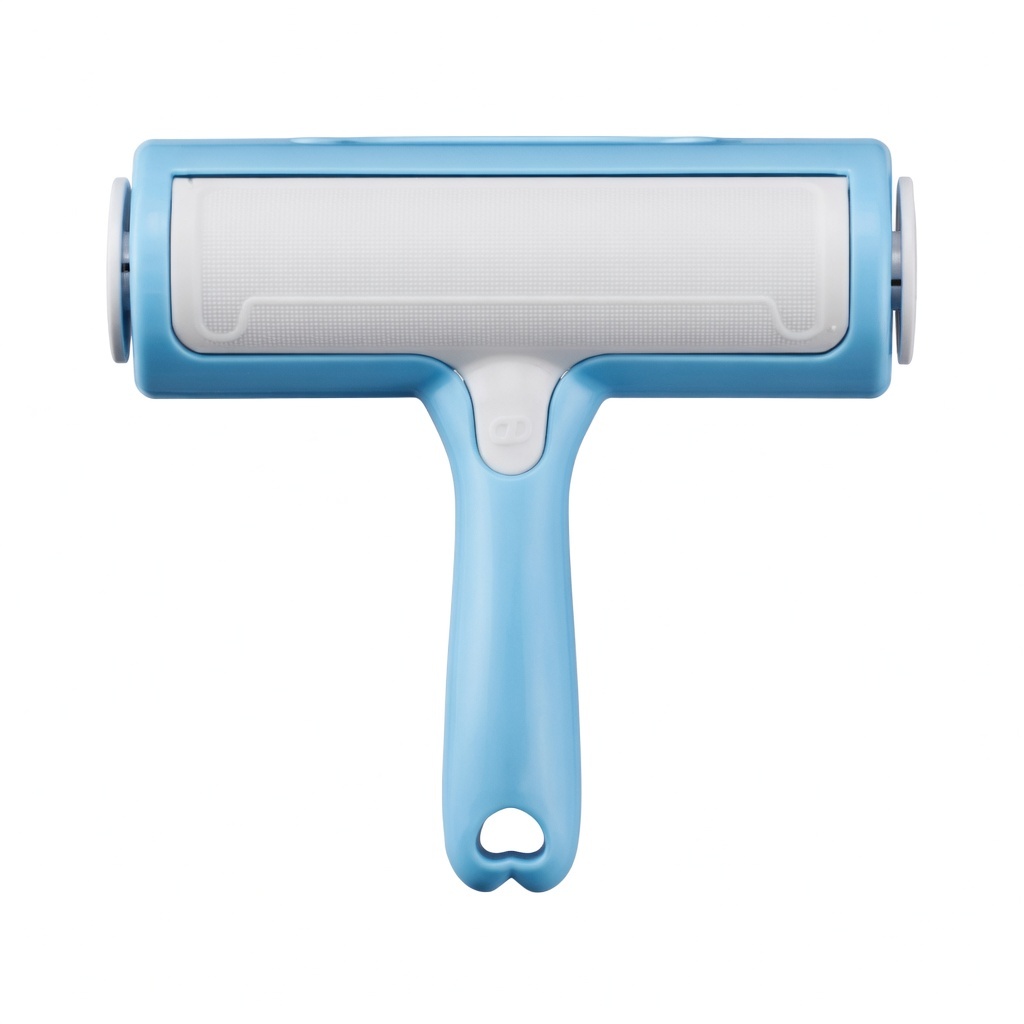
Unlike a damp cloth or a strip of tape, this cleaning product is built around the specific challenge of pet hair. Hair has a way of weaving itself into fabric fibers, standing upright in pile, and clinging stubbornly to upholstery. A roller that moves consistently across a surface handles all of these situations far more evenly than anything improvised.
How Does a Hair Remover Roller Actually Work?
The mechanics vary by type, but the core principle holds across all of them: as the roller head moves across fabric, it generates enough contact, friction, or static charge to pull loose hair away from fibers and gather it in a chamber or onto a tacky surface.
- Adhesive rollers use a sticky sheet that peels away once full, revealing a fresh layer beneath.
- Reusable brush-style rollers feature micro-bristles or fine teeth that catch fur as you roll in one direction, then release it when you reverse or press an opening mechanism.
- Rubber and silicone rollers rely on surface tension and static electricity to attract and hold hair — no adhesive involved.
- Electric or battery-powered removers add motorized suction or vibration to lift embedded hair from thick, deep fabric weaves.
Each type has a different mechanical approach. Knowing which one matches your daily situation makes the difference between a genuinely useful habit and a product that ends up forgotten in a drawer.
The Four Main Types — Which One Fits Your Lifestyle?
Choosing comes down to three things: where you plan to use it, how often, and how much upkeep you are willing to do.
Disposable Adhesive Rollers
These are the most familiar style — a cardboard or plastic core wrapped in lightly sticky paper sheets. You roll it across fabric, the hair adheres, and when the sheet fills up, you tear it off and discard it.
Choose this if you:
- Want zero cleaning or upkeep
- Need something for occasional or travel use
- Prefer a product that is widely available almost anywhere
- Share a roller with multiple people in a household
Drawback: Refills run out, and carrying spare rolls adds bulk to a travel bag.
Reusable Brush-Style Rollers
These feature a head covered in fine, directional bristles. Roll in one direction and the bristles capture hair; reverse direction — or press a release button — and the collected fur drops into a built-in chamber you empty and rinse clean. Popular with daily users for good reason.
Choose this if you:
- Want a long-term, zero-waste cleaning routine
- Have a heavy shedder at home and use it every day
- Prefer not to track down refills when traveling
- Care about reducing single-use waste
Drawback: Periodic rinsing and drying is required, though it takes less than two minutes.
Rubber and Silicone Rollers
These draw on the natural properties of rubber or silicone — surface tension and static — to attract and hold hair without any adhesive layer. They perform well on coarser fur and thicker upholstery fabric.
Choose this if you:
- Deal primarily with short, wiry pet hair
- Want a tool with no moving parts to break or maintain
- Need something that works equally well on car seats, sofas, and clothing
Drawback: Fine hair on delicate fabrics like cashmere or thin knitwear may not cling as effectively.
Electric and Battery-Powered Removers
These devices bring the motorized approach to hair removal, using rotating heads or suction to pull embedded fur from deep-pile fabrics like fleece, velvet, or heavily used upholstery.
Choose this if you:
- Have furniture or car seats with fur worked deep into the weave
- Own a long-haired breed that sheds heavily year-round
- Want a dedicated home tool rather than something to carry daily
Drawback: Larger build, battery dependency, and charging requirements make them impractical for everyday carry.
Key Features to Look for When Buying a Portable Roller
Not every roller labeled "travel size" genuinely fits into a commuter's bag without issue. Here is what actually matters when comparing options.
| Feature | Why It Matters | What to Look For |
|---|---|---|
| Folded or capped dimensions | Determines whether it fits in a purse, pocket, or glovebox | Shorter than a standard pen pouch when folded |
| Weight | Affects comfort for daily carry | Lightweight materials like ABS plastic |
| Retractable or capped head | Protects the roller surface and your bag lining | Snap cap, slide cover, or fold-down handle |
| Refill availability | For adhesive types — are refills easy to source? | Universal refill compatibility |
| One-handed operation | Useful when preparing quickly before a meeting | Single-grip handle, no need to hold fabric taut |
| Build durability | Reflects how long it holds up with regular use | Metal or reinforced plastic hinges |
| Case or clip-on option | Makes it easier to attach to a bag or keep organized | Integrated clip or included travel case |
Getting the Most Out of a Reusable Roller — Technique Matters More Than You Think
Owning a good tool is only part of the equation. How you use it determines whether you lift hair cleanly in one pass or spend several minutes going over the same spot with diminishing results.
Surface Preparation Makes a Difference
Before the roller even touches fabric, a few seconds of preparation changes the outcome. Smooth out wrinkled fabric and brush away any large, loose debris — crumbs, coarse dust, or clumps of matted fur. A roller works most efficiently on a reasonably flat surface; loose fabric that bunches under the head means it skips over hair-covered patches entirely.
For carpets, car seats, or densely textured upholstery, use any built-in scraper, rubber brush attachment, or edge tool that came with your roller first. These accessories loosen hair that has been pressed deep into the weave. Once the surface fur is loosened, the roller picks it up cleanly rather than skimming over it.
Rolling Technique — Short Strokes, Not Long Sweeps
For brush-style rollers, short, rapid back-and-forth strokes build a mild static charge that actively draws hair toward the bristle surface. Long, slow sweeps across a large area are less effective because they do not create the same accumulation effect. Work in small zones — the front of a jacket, one sofa cushion, the back of a car seat — and complete each before moving on.
For silicone and rubber rollers, firm, overlapping strokes in both directions produce the deepest clean. Move up and down, then side to side across the same patch. This cross-hatch approach catches hair that a single-direction pass leaves behind, particularly on thick knitwear or velvet where fur clings from multiple angles.
One point worth keeping in mind: pressing hard does not help. Moderate pressure is enough. Forcing the roller into the fabric actually pushes hair deeper into the weave rather than pulling it out.
Matching the Tool to the Surface
A silicone or microfiber roller handles most surfaces well and offers a stronger grip on pet hair than a basic adhesive option for regular use. That said, the surface still matters.
- On clothing and bedding, a brush-style or silicone roller covers large areas quickly and handles both fine and coarse fur
- On car upholstery and carpet, a rubber roller or one with a built-in scraper attachment reaches hair that other types miss
- On delicate fabrics — cashmere, thin knitwear, or loosely woven material — a soft-bristle brush roller with minimal pressure is far safer than anything with metal teeth or high-tack adhesive
Avoid rollers with sharp metal teeth on delicate fabrics entirely. They can catch threads and cause visible damage, particularly on knits where a single snag pulls a long loop.
A Step-by-Step Walk-Through for Professional Results
Getting a clean, fur-free result every time comes down to a repeatable sequence. This works across clothing, furniture, and car interiors alike.
Step 1 — Lay Garments Flat or Hold Them Taut
Loose fabric bunches under the roller and the head loses contact with hair-covered patches. Lay a jacket on a flat surface or pull a sleeve taut with one hand to keep things stable throughout.
Step 2 — Prep Thick or Textured Surfaces First
On carpet, car seats, or dense upholstery, run the built-in scraper or rubber brush tool across the surface before rolling. This loosens embedded fur and makes the roller pass far more effective.
Step 3 — Apply Firm Even Pressure with Short Overlapping Strokes
Roll both ways — up and down, then side to side — for the deepest pickup. On brush-style rollers, follow the bristle direction for the trapping stroke, then reverse for the release stroke into the collection chamber.
Step 4 — Work in Sections
Divide the garment or surface into zones: chest, back, sleeves, or individual cushions. Finishing one section completely before moving to the next prevents you from re-depositing collected fur onto areas already cleaned.
Step 5 — Use a Cross-Hatch Motion for Deeply Embedded Fur
On velvet, fleece, or thick knitwear, a diagonal second pass after the initial stroke loosens fur that has woven into the pile from multiple directions.
Step 6 — Clean and Empty the Roller After Each Session
Most reusable rollers allow you to open a compartment or rinse the rolling surface. Cleaning immediately after use — rather than letting fur accumulate across multiple sessions — keeps the surface active and ready for next time.
Common mistakes worth avoiding:
- Testing an adhesive roller on a delicate fabric without checking an inconspicuous patch first
- Skipping the protective cap after use, which lets the surface pick up bag lint and dust between sessions
- Leaving a brush-style collection chamber full, which cuts into pickup capacity on the very next use
Where Should You Keep a Portable Roller? (Not Just at Home)
Most people own a roller parked on a laundry shelf. The smarter move is keeping one wherever fur on clothing would be a problem. Here are the spots worth claiming, along with a note on which type works well in each.
Keeping a Pet Hair Roller in Your Handbag or Purse
The single most useful daily carry spot. A compact, foldable reusable roller or a travel-sized adhesive option fits neatly into a zip pocket without adding noticeable weight.Pro tip: Keep it in the innermost zip compartment so it does not snag on other items when you reach in quickly.
Stashing a Roller in Your Backpack or Laptop Bag
Slide it into a tech pouch or slim side pocket. Rollers with a protective case stay clean and contained even when the bag is fully loaded.Pro tip: A small zip pouch prevents it from picking up crumbs or pen marks from the rest of the bag.
Using the Car Glovebox for Quick Hair Fixes
One of the most underused emergency spots. A slim adhesive travel roller or a compact reusable option fits easily and waits for exactly the right moment — before stepping out for an appointment.Pro tip: Keep a spare adhesive refill sleeve tucked behind it for longer trips.
Storing a Roller in the Car Center Console or Door Pocket
For drivers who want immediate access at a red light or in a parking lot, the center console puts it within reach without rummaging.Pro tip: A rubber roller suits this spot particularly well — no refills, handles dog or cat hair on seat fabric in seconds.
Accessing a Roller from Your Work Desk Drawer or Office Locker
A sixty-second pass before a client meeting or presentation, done discreetly at your desk. Keep this cleaning product alongside other personal essentials.Pro tip: A reusable roller works better here than an adhesive one — empty it into a bin without peeling sticky sheets at your desk.
Packing a Pet Hair Roller in Your Gym Bag
Many people move directly from a gym session to a professional or social setting. A compact roller at the bottom of the bag means a quick tidy-up is always within reach.Pro tip: Store an adhesive mini roller inside a sealed zip pouch to prevent the sticky surface from picking up gym bag debris.
Carrying a Roller in Your Carry-On Suitcase or Travel Bag
Frequent travelers benefit from dedicated access without unpacking. A reusable roller plus one backup adhesive sleeve covers most airport, hotel, and rental car situations.Pro tip: Standard adhesive refill sleeves are generally accepted in carry-on luggage, though confirming with your airline before departure is always worth a moment.
Adding a Roller to Your Diaper Bag or Pet Travel Bag
Parents and pet owners traveling with animals are the people most likely to arrive somewhere covered in fur at the worst moment. A small roller in a side pocket solves the problem before it starts.
Keeping a Slim Roller in Your Jacket or Coat Pocket
During colder months, a very slim roller or travel adhesive pack fits in a coat pocket and gives you access at any point during a commute or evening out.
Storing a Roller in a Stroller Basket or Bicycle Handlebar Bag
For parents or active commuters, keeping it in a stroller basket or a small handlebar bag means a quick fix is always nearby, even mid-outing.
Does It Damage Delicate Fabrics?
A reasonable concern, and the answer depends on the type you use and how you use it.
- Adhesive rollers with an aggressive stick can pull threads on loosely woven fabrics. Always test a small hidden patch before running it across an entire garment.
- Reusable brush-style rollers with fine, soft bristles are generally safe on most fabric weights, including lightweight wool and cotton blends.
- Rubber and silicone rollers are among the gentlest options and work well on the widest range of fabric weights.
- Electric removers with rotating heads should stay away from delicate fabrics — the mechanical action can snag or pill the surface, and damage shows quickly on fine material.
When uncertain, a light test stroke on an inconspicuous area will answer the question in seconds.
Caring for a Reusable Roller — Keeping It at Its Best
A well-maintained reusable roller lasts for years. The care routine is genuinely simple, and most of it takes under two minutes.
After each use:
- Open the collection chamber and tap collected fur into a bin
- Wipe the bristle surface with a dry cloth, or rinse briefly under running water if the session was heavy
Restoring stickiness on silicone rollers:
Over time, silicone surfaces can lose their tackiness when skin oils or fabric conditioner residue builds up. Washing with warm water and a small amount of dish soap cuts through that residue and restores the surface to near-new performance. The key point here: do not pour dish soap directly onto the sticky surface. Mix it into warm water first, wash the roller in the solution, rinse thoroughly, and air dry completely. Heat drying can affect the silicone structure over repeated cycles.
Weekly maintenance:
- Rinse the roller head thoroughly under lukewarm water
- Allow it to air dry fully before closing the chamber or replacing the cap
- Check the hinge or locking mechanism for debris that has worked its way in
When to replace:
- Bristles that flatten permanently or no longer spring back signal the roller head needs replacing
- A cracked handle or broken hinge affects both safety and function
- Adhesive sheets that lose their stick even when clean point to a product defect
What to avoid:
- Hot water on plastic components warps the structure over time
- Storing the roller while still wet can cause mildew in bristles or the collection chamber
Real-World Scenarios — Practical Routines for Common Situations
The Commuter's Morning Routine
You are dressed, ready, almost out the door — and the cat takes that exact moment to rub against your dark trousers. A compact roller in a bag pocket and sixty seconds is all it takes. Pull it from its case, roll down each trouser leg twice with a firm, even stroke, check the jacket collar and cuffs, replace the cap. Done before you reach the car.
The Road Trip Kit
Long drives with a dog in the back seat mean fur transfer is inevitable, regardless of how well-behaved the passenger is. A rubber or reusable brush roller in the center console handles the cleanup between stops without the need for refills.
- Keep one for car upholstery, a separate compact one for clothing
- Store an adhesive refill in the glovebox as a fallback
- Use it before stepping into any restaurant, rest stop, or hotel lobby
The Date Night Rescue
A slim reusable roller or a small adhesive travel pack fits in a clutch or jacket pocket. A single pass down the front of your outfit and across the shoulders during a restroom break handles most situations without needing to unpack anything.
- Choose the slimmest format available
- Keep it in a small drawstring pouch to avoid bag mess
- One pass is usually enough if you act at the first sign rather than letting it compound
The Business Travel Kit
Pack it in the top compartment of your carry-on, where it is accessible without disturbing everything underneath. Use it in airport lounges, the hotel room, or a rental car before meetings.
- One reusable roller plus one adhesive backup sleeve covers nearly every situation
- Run it over hotel bedding before placing garments there — hotel lint transfers more than most people expect
Where to Shop and What to Watch For
Rollers are available across general online marketplaces, pet supply stores, travel accessory shops, and drugstores. Each channel has trade-offs worth knowing before you commit.
- Online marketplaces offer the widest range and access to customer photos, which are particularly useful for judging real-world size and build quality. Look for reviews that include comparison photos with familiar objects rather than product-only shots.
- Pet supply stores stock options specifically designed for heavy shedders and coarser fur types.
- Travel accessory shops carry compact options with protective cases already included, often at a slightly higher price point but with better portability features.
- Drugstores and supermarkets are reliable for adhesive refills and basic disposable options, though reusable varieties are less common in physical locations.
When reading product descriptions, check the folded or capped dimensions rather than just the extended length. Confirm refill compatibility for adhesive types before purchasing. Note whether a protective cap or carrying case is included, or whether it comes as an added cost.
Emergency Pet Hair Kit — A Checklist to Build Your Own
Before settling on a final portable setup, use this checklist to confirm coverage for both daily and travel situations.
- One compact reusable brush-style roller with protective cap
- One sleeve of travel-size adhesive refill sheets as a backup
- A small zip pouch or case to keep both contained
- A flat rubber roller or silicone glove for car upholstery and carpet
- A desk or locker roller for the office
- A spare adhesive mini roller in the car glovebox
- A travel roller in the carry-on top compartment
- A roller in the gym bag or daily backpack
With a clean, well-maintained tool in each key spot in your life — your bag, your car, your desk, your luggage — pet hair stops being a daily stressor and becomes a problem you can solve in under a minute, wherever you happen to be. The habit of restocking and cleaning each roller takes very little time, but it pays off every time you walk into a room looking composed and unhurried. Starting with one or two locations and building from there keeps the routine from feeling like an overhaul, and most people find that once they have used a well-placed roller a handful of times, going back to tape scraps or damp cloths is simply no longer something they are willing to do. Fur happens — but being prepared for it is entirely within reach.